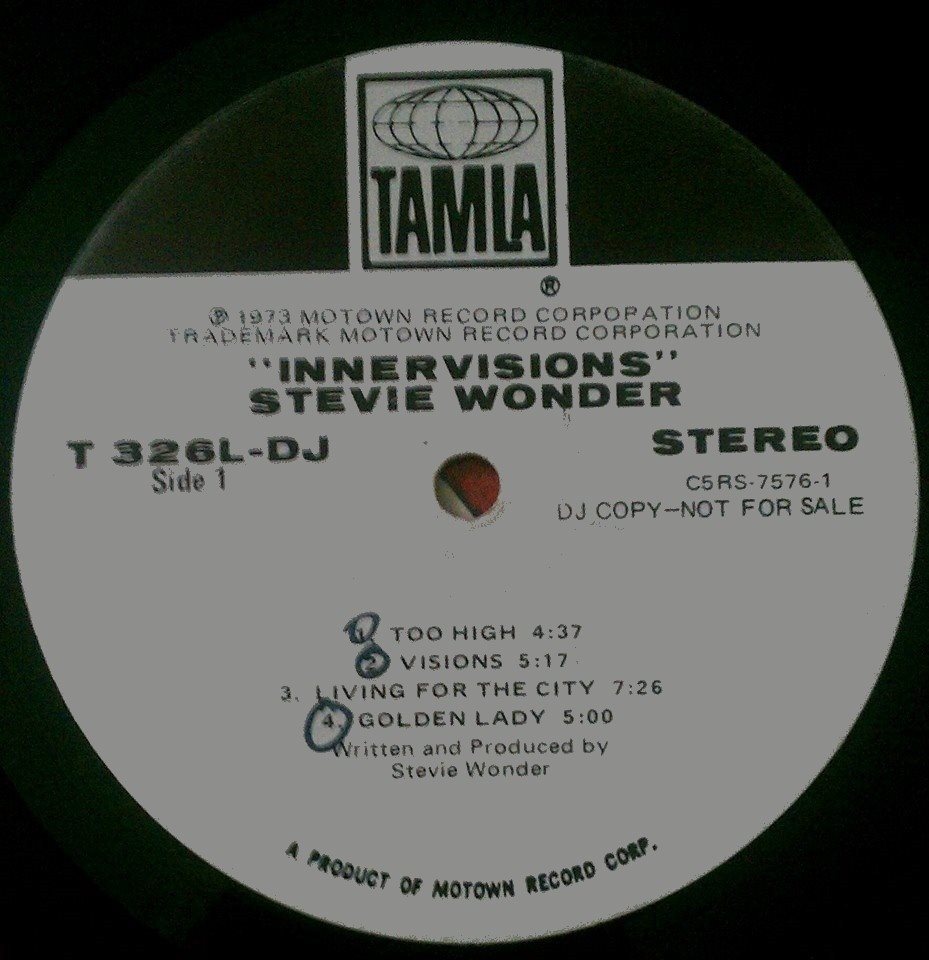
Any Stevie Wonder fans out there..? Released in August of '73, this was his sixteenth studio album. The album, while encompassing a wide range of issues, is still one of my favorites.
"Innervisions" ... View MoreAny Stevie Wonder fans out there..? Released in August of '73, this was his sixteenth studio album. The album, while encompassing a wide range of issues, is still one of my favorites.
"Innervisions" had won Grammy Awards for Album of the Year, and Best Engineered Non-Classical Recording in 1974, while "Living For The City" had won the Grammy for Best Rhythm & Blues Song. To Me, "Innervisions" is one of Stevie Wonder's finest works.
The album is also considered to be one of the greatest albums of all time according to Rolling Stone magazine. "Living for the City" was one of the first soul music songs to deal explicitly with systemic racism.
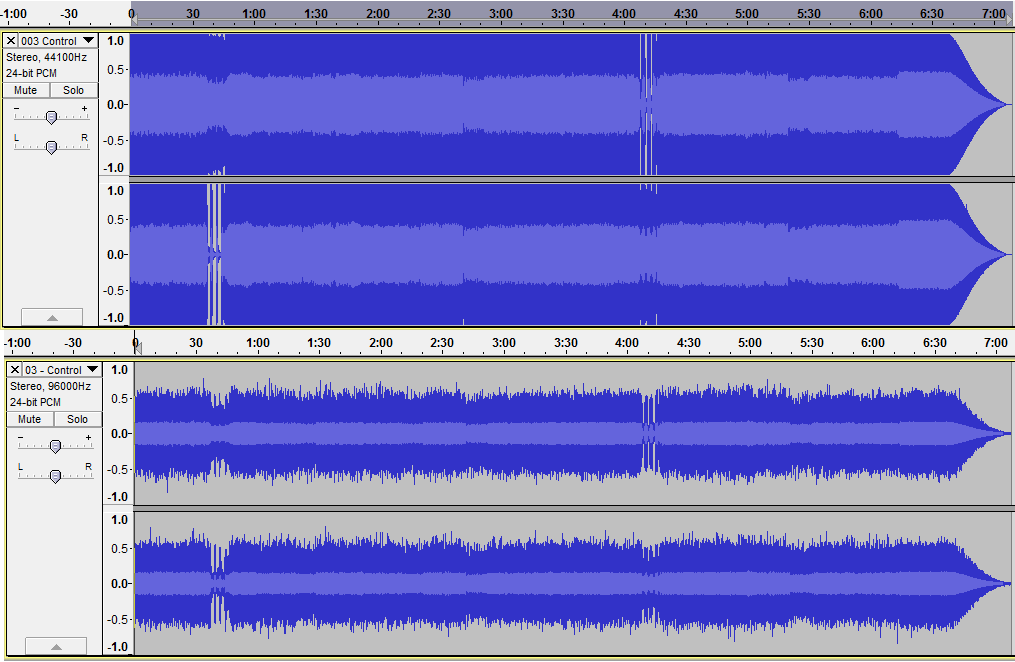
Why do your old records sound better than the "digitally remastered" CD? Here's why: Since the dawning of the Compact Disc, there have been "Loudness Wars" going on. Mastering Engineers and record com... View MoreWhy do your old records sound better than the "digitally remastered" CD? Here's why: Since the dawning of the Compact Disc, there have been "Loudness Wars" going on. Mastering Engineers and record companies use a technique called "Brickwalling".
It has been compressed to the point that the dynamics have been removed from the music. It's LOUD..! This graphic is an audio editor. These are used in production studios, both radio and recording studios.
The wave form on the bottom.. is the original. The wave form on top.. is the digitally remastered version. No highs.. no lows. It's all the same. The dynamics have been squashed, and the over all volume boosted through the roof. To maximum levels.
I will tell you this: Obviously, I work in Radio. However, I'm also an Audiophile. So not only do I find today's pop "music" repulsive, this Brickwalling crap makes it even worse!
And then of course, we have Karlheinz Brandenburg's MP3. This removes the frequencies that you cannot hear. That's how it's a smaller file. Unfortunately, those frequencies that are deleted.. the frequencies that you cannot hear.. support the frequencies that you do hear. And then to Brickwall that mess..? It's garbage compared to your old record.
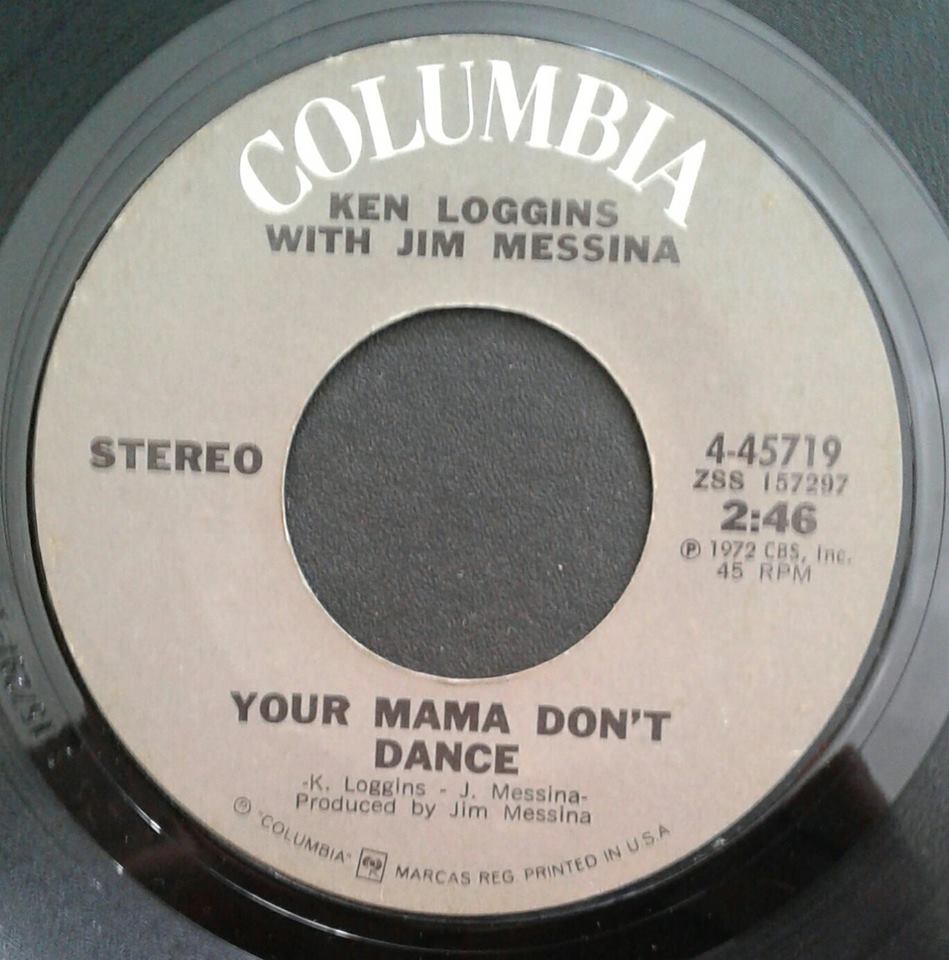
'Outta the car, Longhair!' Kenny Loggins and Jim Messina, had hit it big in November '72 with "Your Mama Don't Dance". The song had entered Billboard's Top 100 chart at the # 89 position, and on Janua... View More'Outta the car, Longhair!' Kenny Loggins and Jim Messina, had hit it big in November '72 with "Your Mama Don't Dance". The song had entered Billboard's Top 100 chart at the # 89 position, and on January 21, 1973, it had peaked at # 4, spending 16 weeks on the chart.
"Out of the car, longhair," was barked by drummer, Merel Bregante. The boogie-woogie piano, incidentally, was played by Michael Omartian.
Jim Messina was working as an A&R man with Columbia Records, when Kenny Loggins was signed to the label. Clive Davis had assigned Messina to work with Loggins on an A&R (Artist & Repertoire) basis. It had soon become apparent how well their voices blended, and so they had recorded an album together.
That album, "Kenny Loggins with Jim Messina Sittin' In" was released in 1971. The album had sold well, and so a second album was inevitable. And that album, entitled, "Loggins & Messina" is from which this song is taken. I have the Quad copy also.
Now, as I understand it, they had written this song one day while waiting for their band to arrive at the studio. They really didn't think much of it.. it was just a little ditty they were playing around with. Little did they realize this was to become the song they would be known for.
And that in itself was frustrating, because they had considered it as basically a throwaway. It really didn't represent the sound they were trying to achieve.
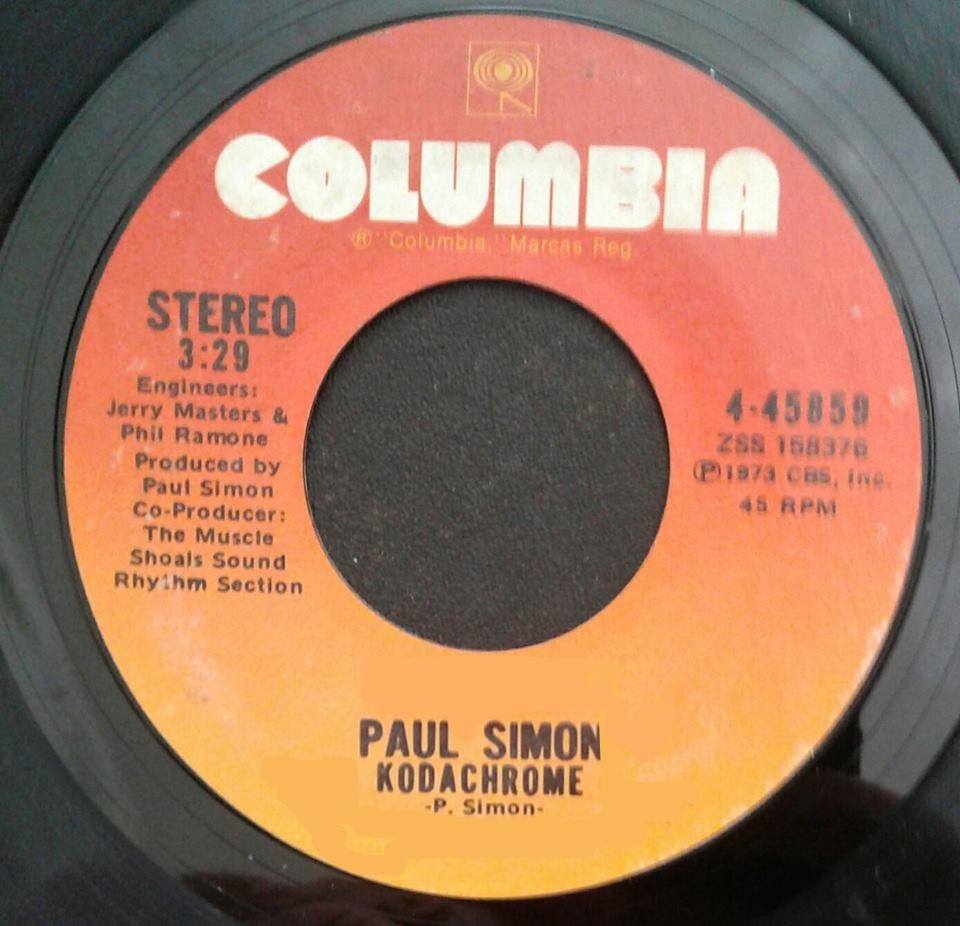
"When I think back on all the *crap* I learned in High School..." From 1973, Paul Simon, "Kodachrome". One of my favorite Paul Simon tunes. And in real life, Simon did use a Nikon camera.
Sadly, on ... View More"When I think back on all the *crap* I learned in High School..." From 1973, Paul Simon, "Kodachrome". One of my favorite Paul Simon tunes. And in real life, Simon did use a Nikon camera.
Sadly, on June 22, 2009, Kodak had officially retired Kodachrome color film after 74 years. Digital technologies had led to Kodachrome's decline and eventual demise. Simon had recorded Kodachrome at Muscle Shoals Sound Studios in Sheffield, Alabama.
He had chosen Muscle Shoals because the rhythm section he had heard play on The Staple Singers' song, "I'll Take You There". He liked the sound. He wanted that rhythm section, that sound, on his next project, "Take Me To The Mardi Gras". Upon his arrival at Muscle Shoals, however, you can imagine his surprise to find.. not Jamaican musicians.. but four white guys from the south!
Kodachrome had peaked at the #2 on Billboards Hot 100
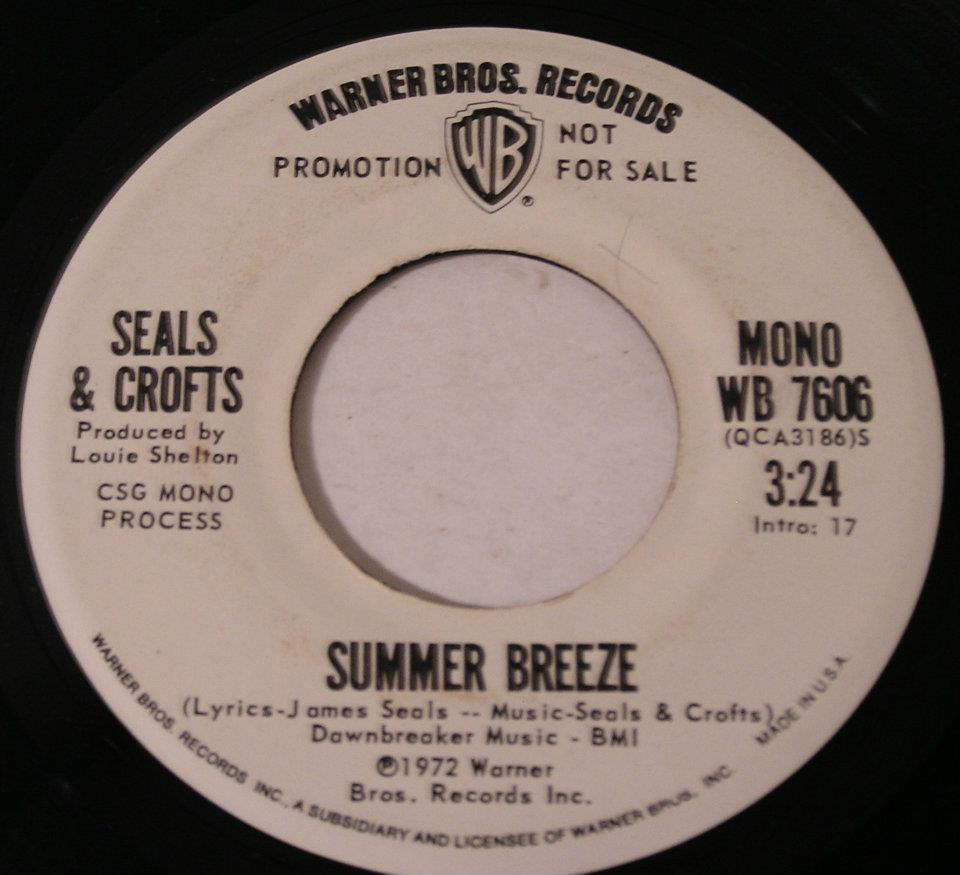
From 1972, James Eugene "Jim" Seals and Darrell George "Dash" Crofts, "Summer Breeze". I couldn't allow Summer to pass without posting this record. To me, this has always been one of many favorites.
... View MoreFrom 1972, James Eugene "Jim" Seals and Darrell George "Dash" Crofts, "Summer Breeze". I couldn't allow Summer to pass without posting this record. To me, this has always been one of many favorites.
You remember the 1958 instrumental hit song, "Tequila" by The Champs..? Seals & Crofts were part of that group! Jim Seals is the brother of Dan Seals. You remember him.. he was "England Dan" in the 1970's duo England Dan and John Ford Coley.
Jim Seals had explained: "We operate on a different level, we try to create images, impressions and trains of thought in the minds of our listeners.". Hence the phrase, "Blowing through the jasmine in my mind". They'd used it to bring about feelings of contentment and harmony. Enjoying the simple pleasures of life.
So, whatever happened to Seals & Crofts..? Well, I try to keep political and religious commentary out of my bio's, but in this case, it's necessary. In 1974, Seals & Crofts had released a very controversial album, their sixth, "Unborn Child". They were both members of the Baha'i Faith and very Pro-Life.
The concept of the album had originated with Lana Bogan. She was the wife of recording Engineer Joseph Bogan. She had watched a documentary on abortion, and had written a poem from the perspective of the aborted fetus.
According to Dash Crofts, because the subject matter was such a sensitive issue, so controversial, Warner Brothers had warned them not to release the album. However, being Pro-Life, this was a sensitive issue to them as well. To them, it was far more important than the money. Of course, to Warner, it was all about business.
And of course, the album was released.. and, according to Bill de Young, the duo had "crossed the thin line" that separated their music from the Baha'i Faith. Unfortunately, this had hurt their popularity and the album was negatively criticized by music critics and had gotten bad reviews.
I like this album.. especially the song, "King of Nothing". For me, there are good memories associated with that song. I was driving through Texas at the time. That's where I had met Wolfman Jack - out on the highway in the middle of nowhere.
Anyway, Seals & Crofts had recorded many wonderful songs, and they're still, and will remain, one of my favorites performers from the 1970's. I mean, how can you not think about the 70's and not think about a Seals & Crofts song?
Diamond Girl.., I'll Play For You.., We May Never Pass This Way Again.., Hummingbird.., I believe I'll play some Seals and Crofts today. How about you..?
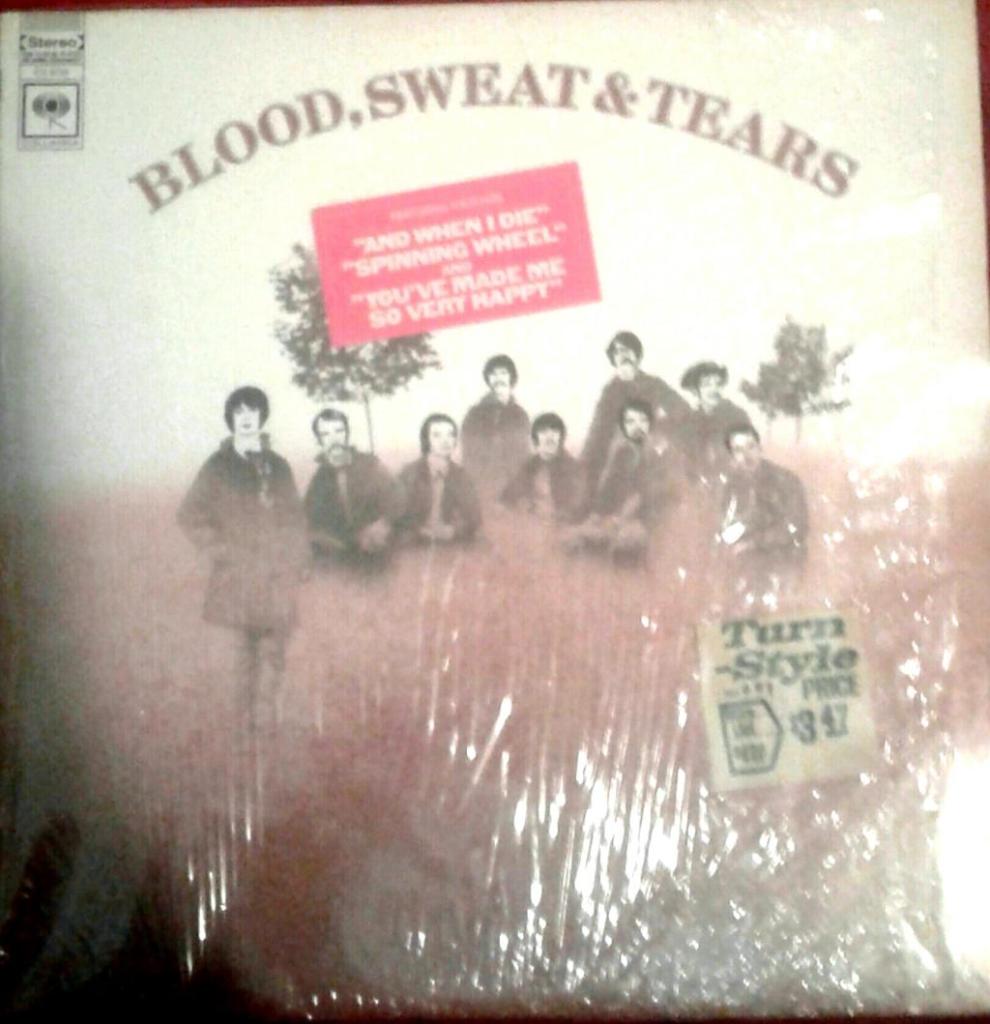
The self-titled album by Blood, Sweat & Tears. How many of you still have your copy? While this album was released in 1968, "Spinning Wheel" was released as a 45 single and had peaked at the #2 positi... View MoreThe self-titled album by Blood, Sweat & Tears. How many of you still have your copy? While this album was released in 1968, "Spinning Wheel" was released as a 45 single and had peaked at the #2 position on the Billboard Hot 100 in July of '69. This was also Columbia Records' best selling album for 1969. "Spinning Wheel" was originally released, incidentally, by Brenda Holloway in 1967.
"Spinning Wheel" was nominated for three Grammy Awards in 1970, winning Best Instrumental Arrangement. It was also nominated for Record of the Year and Song of the Year; the album had also won the Grammy for Album of the Year. David Clayton-Thomas, who had written the song, had described it as being "written in an age when psychedelic imagery was all over the lyrics. It was my way of saying, 'Don't get too caught up, because everything comes full circle'."
Incidentally, the album version of "Spinning Wheel", ends with the 1815 Austrian tune "O Du Lieber Augustin". This was edited out of the 45 version. Group founder, Bobby Colomby's comment at the end, "That wasn't too good", followed by laughter from the rest of the group, was, according to producer James William Guercio, inserted at the last minute after the end of the master tape had been accidentally recorded over by the studio engineer.
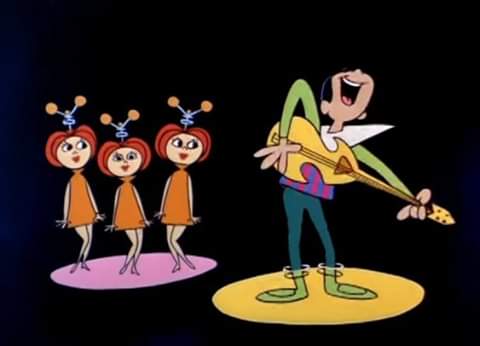
Playing the part of teen idol, Jet Screamer on The Jetson's TV show, is Howard Morris, aka, Ernest T. Bass of the Andy Griffith Show.
I was browsing my album library last night, found this, and thought I'd do a story on it. Of course, you all know Micky Dolenz and Davy Jones from The Monkees, and you're probably also familiar with T... View MoreI was browsing my album library last night, found this, and thought I'd do a story on it. Of course, you all know Micky Dolenz and Davy Jones from The Monkees, and you're probably also familiar with Tommy Boyce and Bobby Hart. What some of you may *not* know, is that Boyce and Hart were affiliated with The Monkees as writers and producers. Christian DeWalden, a publisher and producer friend of Bobby Hart, was interested in organizing a Monkees reunion.
Peter Tork and Michael Nesmith were invited to join, however, Peter had decided to leave the music business altogether, in fact, no one even knew where he was, and Mike had refused to even talk to them, much less consider reforming the group. So, this group ended up being Micky Dolenz, Davy Jones, Tommy Boyce and Bobby Hart. The Monkees logo was under copyright and unavailable to them, so they had decided to form the group under their own names.
The group had made it's public debut at a performance July 4, 1975 at Six Flags over America in St. Louis, Missouri under the name, 'The Great Golden Hits of the Monkees - The Guys Who Wrote 'Em and the Guys Who Sang 'Em". The group had also toured the States for a year before also touring the Far East, having the distinction of being the first American band to play Thailand. At an appearance at Disneyland July 4th of 1976, Peter had joined them on stage for a guest appearance.
Also, later in the year, Peter had reunited with Dolenz and Jones in the studio to record "Christmas Is My Time Of The Year" b/w "White Christmas". It was a limited fan club issue. With the aspiration to capitalize on the popularity of The Monkees as well as that of Tommy Boyce and Bobby Hart, Capitol Records had offered a recording contract. However, the sound they had gotten, was an updated version of The Monkees, and I guess that isn't exactly what Capitol had in mind. Yes, there were mostly new songs.. but also some cover songs.
Many had even considered this to be a Monkees reunion album! Many of the vocals are performed by Micky and Davy, with backing vocals by Boyce and Hart. Occasionally, however, Boyce and Hart do take the lead take the lead.. such as on Bobby's, "I Love You (And I'm Glad That I Said It)". Unfortunately, when this album was released, it saw very little appreciation from music fans, and I don't know why. It's a pretty good album!
As I understand it though, the album didn't make a dent in the charts. It was also reissued on CD.. I believe in 2005. In mid 1976, Dolenz, Jones, Boyce & Hart had filmed a television special called, "The Great Golden Hits of the Monkees" which had showcased the guys doing musical numbers and comedy skits. By March of 1977, though, DJBH had called it quits and everyone had gone their separate ways.
While Tommy and Bobby had gone back to their songwriting careers, Micky and Davy continued touring, backed by Micky's sister, Coco and a backup group called, The Laughing Dogs. In September, 1977, Micky and Davy had returned to England to begin rehearsals for Harry Nilsson's "The Point". In the mid 80s, and again in the 90s, they had teamed up with Peter for the Monkees reunion tours, and in 1996, Mike had joined for the Justus album.
Justus is the Monkees eleventh studio album. It was recorded in celebration of their 30th anniversary and released on October 15, 1996. It was the first Monkees album since Head was released in 1968 to feature all four Monkees. Additionally to their occasional Monkees reunions, Micky had also done cartoon voice-overs, appeared on stage and television, and worked behind the camera as a producer and director. Davy had toured and made various television and stage appearances.
After DJBH had broken up, Boyce and Hart had written songs for several cartoon TV shows including Scooby-Doo and Josie and the Pussycats. They had also worked individually, with Bobby writing for movies, and Tommy had moved to England to work with songwriter Richard Hartley for such artists as Meatloaf and Iggy Pop. He'd later returned to the States and had written a book, "How To Write A Hit Song And Sell It".
Micky and Davy had later reformed the Monkees on an off and on basis throughout the Eighties and Nineties, Then on a sad note, on November 23, 1994, Tommy had committed suicide in Nashville at the age of 55. He had shot himself to death. His wife, Carolyn, had found him dead in the living room of their home. He had left a note, but police would not reveal its contents.
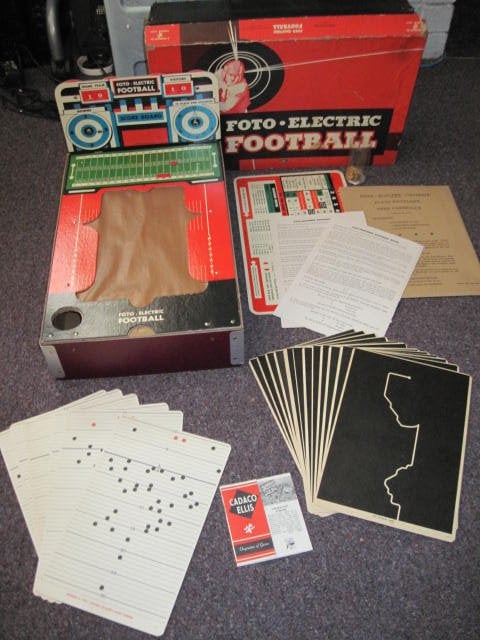
As you know, I love the 1950's and 60's, and so I collect old Pop Culture stuff. To me, it's just cool. I had bought this almost ten years ago at a yard sale. It's a wonder it was still complete and i... View MoreAs you know, I love the 1950's and 60's, and so I collect old Pop Culture stuff. To me, it's just cool. I had bought this almost ten years ago at a yard sale. It's a wonder it was still complete and in the condition it is.
Upon close examination, while the box is a little rough, the game itself looks never to have been played! A 1950 Foto Electric Football Game. It's complete, made of cardboard, and has the original box.
I just thought I'd share this with you. 🙂
My 1957 MONO pressing of Walt Disney's "Fantasia". The STEREO version was released in 1964, seven years later on the multi-colored Buena Vista label.
Fantasia was the first commercial movie ever, to... View MoreMy 1957 MONO pressing of Walt Disney's "Fantasia". The STEREO version was released in 1964, seven years later on the multi-colored Buena Vista label.
Fantasia was the first commercial movie ever, to incorporate stereo sound. Can you imagine what it must have been like to have experienced Fantasia in STEREO in one of the few theatres..? Boston, Philadelphia, Chicago, Detroit, San Francisco, Baltimore, Washington, Minneapolis, Buffalo, Pittsburgh, and Cleveland.
New recording equipment had to be developed, specifically for recording audio for this movie, and special playback equipment developed and installed in each of the theatres. It was called, "Fantasound". The recording alone for Fantasia took almost eighteen months...
Thirty-three microphones were mixed into nine channels, that carried the music into nine recorders. 483,000 feet of sound track were recorded in forty-two days.
In the theatres, ten different Fantasound speaker systems were created. Each utilized multiple speakers placed at various points within the auditorium, immersing the viewers for the first time in stereophonic sound.
The film was released as a "roadshow" picture, and each theatre showing it had to be fitted with Fantasound systems to properly convey the piece. These installations had greatly increased production costs for the film, which is partly why it was a commercial failure until decades after its original release.
Walt Disney and "Fantasia" were way ahead of their time. The Roadshow's came to a close in 1941 because the amount of equipment required for the installation, and limited space in the projection rooms, which was a major issue.
In April 1941, RKO Pictures had acquired distribution rights of Fantasia, and had replaced the Stereo Fantasound soundtrack with a monaural soundtrack. All but one of the original Fantasound systems had been dismantled and contributed to the war effort.
On February 26, 1942, an Academy Honorary Award was given to Walt Disney, William "Bill" Garity, John Hawkins and RCA for their "outstanding contribution to the advancement of the use of sound in motion pictures through the production of Fantasia".
I know.. it obviously isn't Rock & Roll, but how many of us had watched this when we were kids? I just thought I'd do a little background history on it.
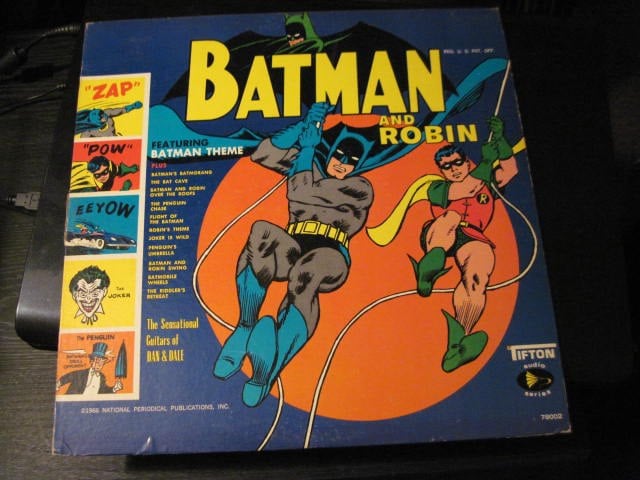
I've not posted a vinyl piece in a while.. figured it was about time I did. Here's one for my fellow record collectors. This, you've no doubt seen before, however, you may not have known 'exactly' wha... View MoreI've not posted a vinyl piece in a while.. figured it was about time I did. Here's one for my fellow record collectors. This, you've no doubt seen before, however, you may not have known 'exactly' what this is.
When the 'Batman' show first appeared on TV back in 1966, a toy company in Newark, NJ had produced this children's record in an effort to cash in. Credited to 'The Sensational Guitars of Dan & Dale', the group was actually made up of 'Dan and Dale' (actually blues guitarists Danny Kalb and Steve Katz - pre Blood, Sweat & Tears), Sun Ra on Hammond B-3 and Al Kooper on organ, John Gilmore and Marshall Allen on Sax.
page=2&callback_module_id=pages&callback_item_id=11512&year=&month=
Load More