THE LAST SUNDAY OF THE CHURCH YEAR
November 22, 2026
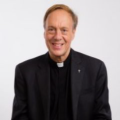
Pastor Tom Steers
Christ the Saviour Lutheran Church, Toronto
- A Confessional Lutheran Church
OUR BIBLE READINGS:
(From the One-Year Lectionary)
Old Testament – Isaiah 65:17-25
Psalm 149
Epistle – 1 Thessalonians 5:1-11
Gospel – Matthew 25:1-13
Our Hymn of the Day from Lutheran Service Book is LSB 516, “Wake, Awake, for Night Is Flying” https://www.youtube.com/watch?v=dNYJtHMC0pw&list=RDdNYJtHMC0pw&start_radio=1
THE SERMON –
Dear brothers and sisters in Christ, today we come to the end of another Church Year.
Throughout the past twelve months, we have again followed the life and ministry of our Lord Jesus Christ, from His birth to His suffering, death, resurrection, and ascension.
We have heard His teaching, witnessed the miracles, and been reminded of His saving work for us.
Yet as the Church Year concludes, today’s readings direct our attention beyond past events.
They point to the future, to the day when Christ will return in glory, when this present world will come to an end, and He will usher in the new heavens and new earth.
Our Bible texts hold an essential truth: Humanity does not control the course of history. Earthly powers do not determine its conclusion. Christ does.
That day is coming.
We don’t know when, yet we know His arrival is certain.
In our Gospel passage, Jesus gives us the Parable of the Ten Virgins.
It contains both a warning and a wonderful promise.
It warns us against becoming careless and complacent about the faith.
The parable also assures us that the faithful who remain in Christ have nothing to fear when He returns on the Last Day.
Jesus begins by describing ten virgins who take their lamps and go out to meet the bridegroom.
Five are wise; five are foolish.
All ten have lamps.
All are waiting for the bridegroom.
They become drowsy and fall asleep. But there’s one important difference. The wise virgins have brought additional oil for their lamps, while the foolish have not.
When the bridegroom is delayed, the oil in the foolish virgins' lamps begins to run out.
Suddenly, at midnight, the announcement is heard: “Here is the bridegroom! Come out to meet him.”
The wise virgins are ready.
Their lamps are burning, and they enter the wedding feast with the bridegroom.
The foolish virgins, however, have to leave to obtain more oil.
When they return, the door is shut.
Their desperate request, "Lord, lord, open to us," receives a terrible answer: "Truly, I say to you, I do not know you."
Jesus concludes with these words: "Watch therefore, for you know neither the day nor the hour."
What is Jesus teaching us?
First, we need to understand who the bridegroom represents.
The bridegroom is Christ Himself.
The wedding feast represents His heavenly kingdom, the marriage feast of the Bridegroom and His bride, the Church. It pictures the salvation and everlasting life Christ has prepared for His people.
The ten virgins represent those who outwardly belong to the visible Church and who profess to be waiting for Christ's return.
There is very little outward difference between the wise and foolish virgins.
All have lamps. All are waiting. All appear to belong to the same company.
Yet five are prepared, and five are not.
The difference is the oil.
Lutheran theologians have traditionally seen the oil as representing the gift of faith, which the Holy Spirit creates and sustains through the Gospel.
The foolish virgins have the outward appearance of believers, but they lack the living faith necessary to receive the bridegroom when He arrives.
This is a warning for us today.
It is possible to have an outward association with Christianity without possessing a living faith in Christ.
It’s possible to have been baptized, to have attended church, to know the words of the Creed, and be familiar with Scripture, yet drift from Church attendance and become indifferent to the very gifts through which God sustains our faith.
The tragedy of the foolish virgins isn’t that they failed to bring enough oil on one particular evening.
Their situation illustrates something far more serious: the danger of neglecting the faith until it is lost.
We should never underestimate that risk.
Martin Luther, in his 1522 Sermon on Matthew 25:1-13, makes an important observation: No one can believe for another; “everyone must have his own faith."
We can encourage and pray for others.
God's Word is taught and preached in His true Church.
Yet no one can believe in Christ on behalf of someone else.
Each must believe and hold fast to the gift of faith that God provides.
How does God create and sustain faith?
He does so through His appointed Means of Grace: His Word and Sacraments.
Through the preaching of the Gospel, the forgiveness of sins proclaimed in Holy Absolution, through Baptism, and in the reception of Christ's true body and blood in the Lord’s Supper, the Holy Spirit creates and strengthens faith in our hearts.
This is why remaining connected to Christ's Church through weekly attendance is so vitally important.
To deliberately withdraw from the Church, to neglect hearing God's Word and turn away from the Sacraments Christ instituted is to place oneself in spiritual peril.
We cannot expect our faith to survive when we continually neglect the very gifts through which God sustains it.
We must also understand that Jesus is not teaching salvation through good works or human effort.
The wise virgins are not saved because they have earned the wedding feast through their preparedness.
Salvation is entirely God's gracious gift, received through faith in Christ as Saviour.
Good works necessarily follow living faith, just as light comes from a burning lamp.
Yet those works do not buy forgiveness in whole or part; good works are evidence of the faith.
Our salvation rests entirely upon Christ, who died for our sins and rose again for our justification.
Here we find the wonderful comfort of the parable.
The bridegroom is coming.
For those who trust in Christ, His coming is not something to fear.
It is the blessed return to anticipate with joy.
Our Epistle reading from 1st Thessalonians reinforces this.
St. Paul reminds us that the Day of the Lord will come like a thief in the night.
Those who place their confidence in earthly peace and security will be caught unprepared. Yet Paul tells Christians: "You are all children of light, children of the day."
He then provides this wonderful promise: "For God has not destined us for wrath, but to obtain salvation through our Lord Jesus Christ, who died for us so that whether we are awake or asleep we might live with him."
What a wonderful assurance!
Our salvation doesn’t depend upon our ability to predict the day of Christ's return or upon the strength of our own spiritual preparedness.
It depends upon Jesus, who has paid the full price of our sin debt.
This brings us to another important matter on the final Sunday of the Church Year.
The end of this present age is not the only one to consider.
Each of us will also come to the end of our earthly life.
Death may come after many years, or unexpectedly.
We don’t know the day or hour of our departure from this world any more than we know the day of Christ's return.
But for Christians, neither death nor the end of the world has the final word.
Jesus Christ does!
Through His crucifixion, He made complete satisfaction for our sins.
Through His resurrection, He defeated death.
Through His ascension, He reigns as Lord over all creation.
Dear Christians, do not become careless about your faith.
Do not neglect God's Word.
Do not abandon the fellowship of His Church or the Sacraments through which He gives and sustains faith.
Return daily to God's promises through repentance and faith.
Remember that even a weak faith saves, because its confidence rests not in the strength of the believer, but in our all-powerful Saviour.
We are mighty sinners, but Christ is an even mightier Redeemer!
We wait for the Bridegroom, not in fear, but in confident expectation.
For the One who is coming is the same Lord who loved us enough to die for us.
Until that day, may the Holy Spirit keep our lamps burning through the gifts of God's Word and Sacraments, preserving us in the one true faith.
In Album: Pastor Tom Steers's Timeline Photos
Dimension:
480 x 384
File Size:
24.81 Kb


Be the first person to like this.