THE TWENTIETH SUNDAY AFTER PENTECOST
October 11, 2026
Pastor Tom Steers
Christ the Saviour Lutheran Church, Toronto
Our Bible Readings:
... View MoreTHE TWENTIETH SUNDAY AFTER PENTECOST
October 11, 2026
Pastor Tom Steers
Christ the Saviour Lutheran Church, Toronto
Our Bible Readings:
Old Testament – Isaiah 25:6-9
Psalm 23
Epistle –
Gospel – Matthew 22:1–14
Our Hymn for the Day from Lutheran Service Book is 510, “A Multitude Comes from the East and the West”
https://www.youtube.com/watch?v=G9MS57osWeI&list=RDG9MS57osWeI&start_radio=1
THE SERMON,
Clothed in the Righteousness of Christ –
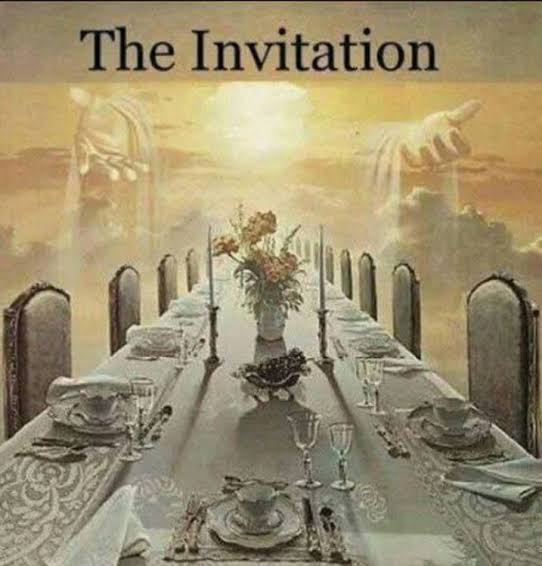
“Everything is ready. Come to the wedding feast.”
These are the King’s words in today's Gospel text.
His son is to be married, so the King prepares a magnificent feast.
The food is ready, the celebration about to begin.
Only one thing remains: the invited guests must come.
Yet, astonishingly, they refuse.
Some pay no attention and return to their farms and businesses.
Others seize the king's servants, mistreat and even kill them. What should have been a joyful occasion becomes a tragedy.
Jesus tells this parable to reveal both God's extraordinary grace and the terrible consequences of rejecting His invitation.
It is a warning against unbelief, indifference, and self-righteousness.
Yet above all, it directs people to the salvation God has prepared for us in His Son, Jesus Christ.
The king represents God the Father, and the wedding feast is prepared in honour of His Son, our Lord Jesus Christ.
Throughout Scripture, Christ is portrayed as the Bridegroom, and the Church His beloved Bride.
He has given Himself for her, purchasing her with His holy and precious blood and His innocent suffering and death.
The wedding feast, therefore, points us to the blessings of God's kingdom, which we receive now through faith and will enjoy in their fullness when Christ returns.
It is the celebration of our salvation, accomplished entirely by God's grace.
Consider the promise given through the prophet Isaiah in today's Old Testament reading.
The Lord declares that He will prepare a feast for all peoples.
He will swallow up death forever, wipe away the tears from every face, and take away the reproach of His people.
What a glorious promise!
The greatest enemy of humanity is death, and no amount of human wisdom, morality, wealth, or religious achievement can overcome it.
But God Himself accomplished what we could never do for ourselves.
Through the death and resurrection of Jesus Christ, sin has been atoned for, death defeated, and everlasting life secured for all who believe in Him.
This is the feast our heavenly Father has prepared.
Everything is ready because Christ alone performed the work of our redemption.
Yet the first guests refuse to come.
These ingrates remind us of those who rejected God's messengers throughout the history of Israel, culminating in the rejection of the Messiah Himself.
The prophets had announced God's promises.
John the Baptist had prepared the way for Christ.
Now the Son of God stood among His people, yet many denied Him.
Some were indifferent.
Their private affairs seemed more important than the King's invitation.
Others were openly hostile, attacking the servants who brought the message.
Here we encounter a searching word of God's Law.
Sin does not always appear as open rebellion.
Sometimes it manifests as indifference toward the things of God.
The concerns of life, our work, possessions, our plans and pleasures, can take the place of God's Word.
We may never imagine ourselves attacking God's messengers, yet we can still disregard the message they bring.
We can neglect worship, treat the preaching of the Gospel as unimportant, and become so preoccupied with earthly concerns that we give little thought to eternal blessings, to the redemption Christ offers us.
The Law exposes our sin. It leaves us with no excuse or any claim to a righteousness of our own.
But notice what the King does next.
His grace is not exhausted. He sends his servants into the roads and commands them to invite everyone they find.
The servants gather both bad and good, and the wedding hall is filled with guests.
Here is the wonderful breadth of the Gospel.
God's invitation is not restricted to those who just appear respectable, successful, or morally superior.
The invitation goes out to sinners who have nothing to offer the king.
Their entrance depends not upon personal worthiness, but upon the king's generosity.
This same grace is proclaimed to us through the Gospel.
Christ came to save sinners.
He did not incarnate into human flesh because we made ourselves worthy.
He came because we could not save ourselves.
He bore our sins upon the cross, suffered the judgment we deserved, and rose again to give us forgiveness and life.
The Pastor who announces the forgiveness of sins in Christ name is a messenger of the King.
The Church's mission is not to offer people a ladder to climb to heaven, or present some other way to earn God's favour.
It is to proclaim what God has already accomplished for them through His Son.
Then, in today’s Gospel text, Jesus adds a detail that brings the parable to its most searching point.
The King enters the wedding hall and notices a man not wearing the wedding apparel the King provided.
He asks, “Friend, how did you get in here without a wedding garment?”
The man is speechless.
The King orders that he be cast into the outer darkness, where there’s weeping and gnashing of teeth.
Why is the man condemned?
He had accepted the invitation and entered the hall.
Why is his presence not enough?
The answer lies in the garment provided.
This fellow’s problem is not a lack of wealth or social standing.
The issue is that he has rejected the King’s gracious provision.
He wants to attend on his own terms, rather than receive what has been freely given.
The wedding garment points us to Christ’s righteousness.
We cannot stand before the holy God clothed in our own supposed merits.
Our best works cannot erase our sins; our religious endeavors do not make us righteous before the Almighty.
Even our most sincere attempts at holiness fall short of God's perfect Law.
We need a righteousness that is not our own.
And this is precisely what Christ gives us through the Gospel.
By His perfect obedience, atoning death, and victorious resurrection, He has won the righteousness we need.
Through faith, we receive His gifts and stand before God forgiven and accepted for Christ's sake.
As St. Paul writes in Galatians 3:27, “For as many of you as were baptized into Christ have put on Christ.”
In Holy Baptism, God clothes us with Christ and makes us heirs of His promises.
Through the preaching of His Word and the gift of Holy Absolution, Christ directs us away from confidence in ourselves and toward the forgiveness He won for us.
At His Holy Supper, our Lord gives us His true body and blood for the forgiveness of sins and strengthens our faith in His promises.
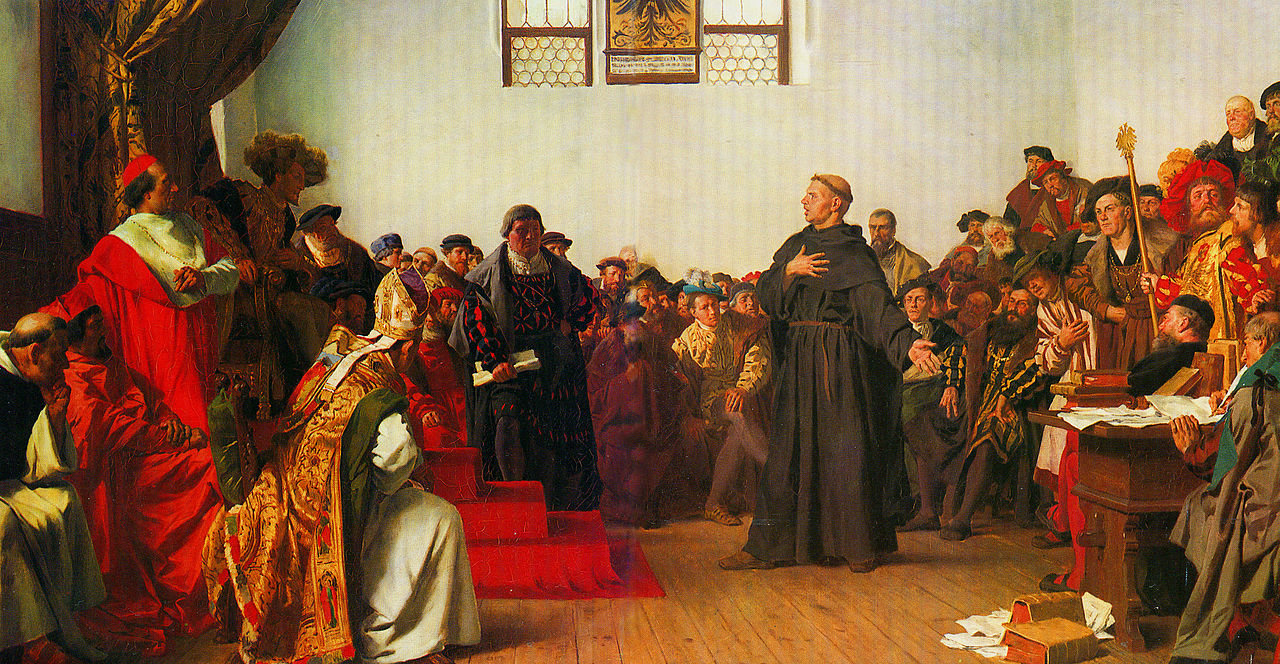
Martin Luther, writing on today’s Gospel, explained, “This wedding garment is Christ Himself, whom we put on through faith. He is given to us through the Gospel and the Sacraments, so that whoever believes in Him is clothed with His righteousness and holiness. Without this garment, no one can remain in the presence of God.” (Luther, Church Postil, Sermon for the Twentieth Sunday after Trinity, Matthew 22:1-14.)
What comfort this is!
Our confidence before God does not rest on us.
It rests upon Christ, who has done everything necessary for our salvation.
At the same time, the man without a wedding garment warns us against presuming upon God's grace while refusing Christ and His righteousness.
We cannot claim the blessings of the kingdom while insisting our own goodness is sufficient.
True faith receives Christ as He is offered in the Gospel. That faith bears fruit in repentance and a new life of love toward the neighbour.
Our good works do not purchase the wedding garment. They are evidence of the faith that receives it.
This also helps us understand the closing words of Jesus: “For many are called, but few are chosen.”
The invitation is proclaimed broadly, but not everyone receives it in faith.
Some reject the Gospel outright; others seek God's blessings aside from the righteousness He provides in Christ.
The warning is serious.
It calls us to repentance, and to complete and continual reliance upon our Saviour.
That is why St. Paul can write in today's Epistle, even amid imprisonment and hardship, “Rejoice in the Lord always; again I will say, rejoice.”
Christian joy is not founded upon favourable circumstances, but the certainty of God's grace in Jesus.
The peace of God guards our hearts and minds because, through Christ, we are reconciled to our heavenly Father.
And so, we return to the king's invitation: “Everything is ready. Come to the wedding feast.”
Dear Christians, Christ has prepared the feast. He has borne our sins, conquered death, and clothed us in His righteousness.
Through His Word and Sacraments, He continues to deliver the blessings of His salvation to us.
We come not boasting in our achievements, but trusting in His mercy.
Like the sheep in Psalm 23, we are entirely dependent on our Shepherd.
He restores our souls, leads us in paths of righteousness, and remains with us even in the valley of the shadow of death.
He prepares a table before us and promises that we shall dwell in the house of the Lord forever.
One day, our faith will become sight.
Our tears will be wiped away, death will be swallowed up forever, and the Bridegroom will welcome His Church into the eternal marriage feast of the Lamb.
Until then, let us cherish the King's invitation and cling to Christ alone.
For everything is ready.
The Bridegroom has come.
The garment of salvation is given.
And our Saviour welcomes believers into the feast that has no end.
THE NINETEENTH SUNDAY AFTER PENTECOST
October 4, 2026
Pastor Tom Steers
Christ the Saviour Lutheran Church, Toronto
Our Bible Readings:
... View MoreTHE NINETEENTH SUNDAY AFTER PENTECOST
October 4, 2026
Pastor Tom Steers
Christ the Saviour Lutheran Church, Toronto
Our Bible Readings:
Old Testament – Isaiah 5:1-7
Psalm 80:7-19
Epistle – Philippians 3:4b-14
Gospel – Matthew 21:33-46
Our Hymn for the Day from Lutheran Service Book is LSB 644, “The Church’s One Foundation” https://www.youtube.com/watch?v=Lh_shvHCLTA&list=RDLh_shvHCLTA&start_radio=1
THE SERMON –
‘Christ, the Cornerstone’
Brothers and sisters, peace, grace, and mercy be to you from God our Father, and our Lord and Saviour Jesus Christ. Amen.
In today’s Gospel text, our Lord tells a parable that cuts to the heart of Israel’s history, and points to every sinner’s rebellion, then and now.
It begins as an earthly story: “There was a landowner who planted a vineyard, put a fence around it, dug a winepress, and built a watchtower.”
This is no random image.
It’s almost a direct quotation from the prophet Isaiah, Chapter 5, where the vineyard represents Israel—the people whom God had chosen, loved, and nurtured.
The vineyard is God’s beloved Church, His people of promise.
God Himself planted and cared for it and expected it would bear fruit.
But when harvest time came, and the landowner sent servants to collect some of the crop, the tenants seized them.
The servants here represent the Old Testament prophets and the New Testament Apostles.
They beat one, killed another, and stoned others.
So, the owner, God, sent more servants, and the tenants did the same.
Finally, he sent His Son, thinking, “They will respect Him.”
But the tenants conspired and said, ‘This is the heir. Let us kill him, and have the inheritance.’
And they did.
Then Jesus asks the question: “When the owner of the vineyard comes, what will he do to those tenants?”
The crowd answers, “He will put those wretches to a miserable death and lease the vineyard to others who will give him the fruits in their seasons.”
Jesus replies, quoting Psalm 118:
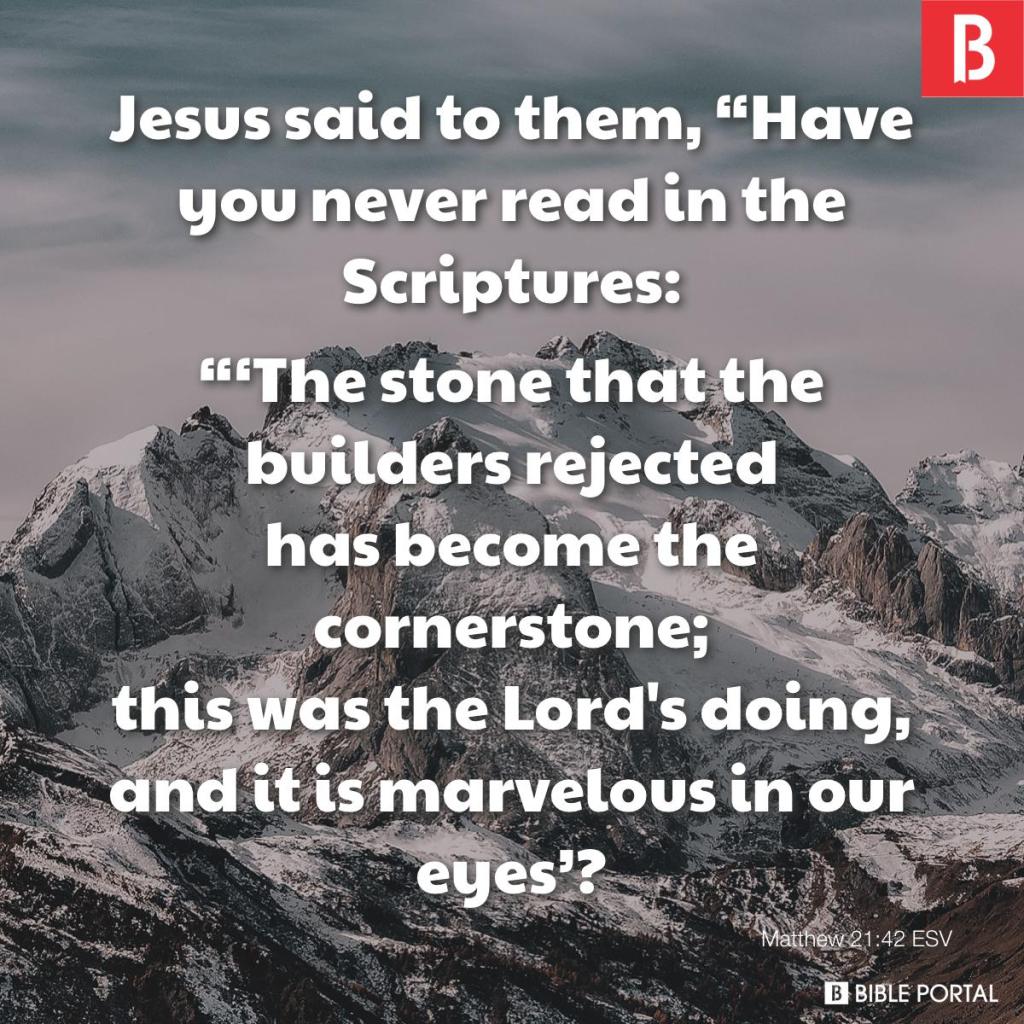
“The stone that the builders rejected has become the cornerstone; this was the Lord’s doing, and it is marvelous in our eyes.”
Then Christ drops the hammer:
“Therefore I tell you, the kingdom of God will be taken away from you and given to a people producing its fruits.”
This parable is not a comfortable story.
It’s a confrontation.
And one of those moments when the Law of God exposes human sin in all its stubbornness and pride.
Jesus spoke these words to the chief priests and Pharisees—the religious leaders of Israel.
They were the “tenants” of the vineyard, entrusted with God’s Word and worship.
They were called to tend to His people faithfully and prepare for the coming Messiah.
But instead, they twisted God’s Word into human-made rules.
The Father sent Elijah, Isaiah, Jeremiah, Amos, Zechariah to recall His people.
Yet the people killed the prophets and would not repent.
And when the Son of God Himself appeared, they rejected and murdered Him.
This parable points to the cross.
We can hear the echo of Good Friday here.
“Come, let us kill Him and have His inheritance.”
And that’s exactly what they did.
They cast the Son outside the city, outside the vineyard, and crucified Him.
But what they intended for evil, God intended for good.
The rejected stone became the cornerstone.
Out of death, came life.
Out of rejection, came the fulfilment of God’s plan for redemption.
Out of faithless judgment, came salvation.
It’s tempting to stop there and think this parable is only about “them”—the leaders of Israel in the first century.
But Jesus didn’t tell parables as history lessons.
He told them for us.
And here the Holy Spirit calls for self-examination.
We, too, are tenants in God’s vineyard.
Everything we have—our lives, families, faith—belongs to God.
We are caretakers, not owners.
We are called to bear fruit in the vineyard of the Lord.
Yet how often do we act like the vineyard is ours?
How easily pride creeps in when we think of our righteousness, our piety.
We start to falsely believe that the vineyard belongs to us, and that God should be pleased with our works.
But the fruit God desires is not self-assertion or moral display.
It is repentance and faith.
Humility and love.
It is trust in Christ alone.
Martin Luther once said that the greatest idolatry is to seek God where He has not promised to be found, and to ignore Him where He actually is.
That’s exactly what happened in this parable.
The religious leaders wanted a Messiah who would affirm their religion of works righteousness, not one who would call them to repentance.
And so, they missed God in human flesh, who stood before them.
In the same way, the world still rejects the cornerstone.
Many people want a religion of self-fulfillment, moral encouragement, or political correctness —not a Saviour who bleeds for their sin.
They want a God who gives advice, not redemption.
They want a Christ who agrees with them, not one who reigns over them.
The tragedy is that in rejecting the true Saviour, they lose the very inheritance He came to give.
But here is the Gospel, the Good News, dear friends:
The rejected stone has become the cornerstone.
What human beings despised, God exalted.
The crucified Christ is now the foundation of His Church, the living Rock upon which we stand.
When the Son was cast out of the vineyard and killed, He did not stay dead.
The stone the builders threw away was raised from the tomb.
And now, He is the sole foundation of a new people—His Church—built not on human worthiness, but on divine grace and mercy through Jesus.
That means the kingdom of God isn’t constructed on worldly achievement, not on status, nor on human wisdom, but on Christ alone.
He is the foundation and the builder.
He is the owner and fruit-bearer.
He is the true Vine, and we are the branches.
To be part of His Kingdom is to live by faith—to receive His Word and Sacraments as pure gifts, not possessions.
To bear fruit is to confess His name, trust His mercy, and love as we’ve been loved.
It is to live in daily repentance and forgiveness.
It is to say, ‘This life, faith, and salvation—all belong to and come from You O Lord.’
The Christian Church stands or falls on that confession.
When it forgets that her life depends on the rejected but risen Cornerstone, the Church ceases to be a vineyard and becomes a wasteland.
But when she holds fast to Christ crucified and risen, the Church bears fruit in every season.
The parable ends with both a warning and promise.
The warning is clear: “Whoever falls on this stone will be broken to pieces; and when it falls on anyone, it will crush him.”
That is the judgment of God’s Law.
To reject Christ is to reject life itself.
But the promise is greater still:
The one who trusts in this Cornerstone will never be put to shame.
This Rock is solid ground for sinners who have no other hope.
Christ was cast out so that we might be brought in.
He was slain so we might live.
Dear Christians, receive His gifts, rejoice in His mercy, and bear fruit in lives of love and service.
Not to earn the inheritance, because Christ’s blood and resurrection have already won it for us.
“This is the Lord’s doing, and it is marvelous in our eyes.”
THE EIGHTEENTH SUNDAY AFTER PENTECOST
September 27, 2026
Pastor Tom Steers
Christ the Saviour Lutheran Church, Toronto
... View MoreTHE EIGHTEENTH SUNDAY AFTER PENTECOST
September 27, 2026
Pastor Tom Steers
Christ the Saviour Lutheran Church, Toronto
Our Bible Readings:
Old Testament – Ezekiel 18:1-4, 25-32
Psalm 25:1-10
Epistle – Philippians 2:1-18
Gospel – Matthew 21:23-32
Our Hymn of the Day from Lutheran Service Book is LSB 655, “Lord, Keep Us Steadfast in Your Word” https://www.youtube.com/watch?v=S8ViZi7M5p4&list=RDS8ViZi7M5p4&start_radio=1
THE SERMON –
Our Lord makes a startling statement.
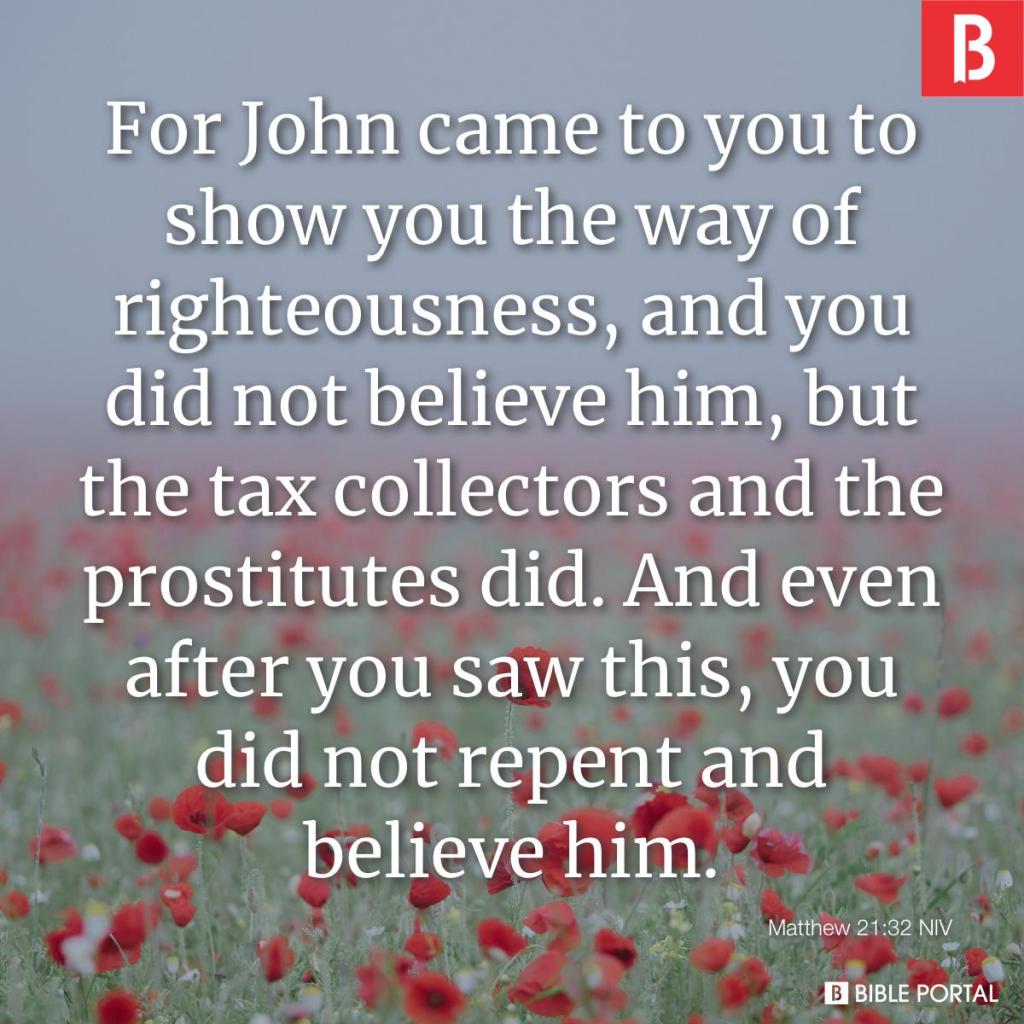
In our Gospel text, He tells the chief Temple officials and Pharisees that tax collectors and prostitutes are getting into the Kingdom of Heaven before them.
The Lutheran Reformation of the Church expressed its beliefs in the Augsburg Confession.
Article XII of the Confession says that true repentance has two parts.
First, a person recognizes that their situation is utterly broken.
The second part is that they believe Jesus is the solution to the problem.
False denominations make repentance into our work of salvation.
Biblical repentance is recognition and sorrow over sin in which we observe two truths: we have a problem, and Jesus is the solution.
As the Apostle Paul wrote in Romans 3:23-24: “all have sinned and fall short of the glory of God, and are justified by his grace as a gift, through the redemption that is in Christ Jesus.”
At the conclusion of the short parable of the two sons and the vineyard, the Apostle Matthew tells us that the Temple authorities are ready to kill Christ.
But this is all working according to the Lord’s plan of redemption.
In our Gospel text, Jesus has come to die on Friday of Holy Week.
He has come to make the ultimate Passover sacrifice, which will pay for the sins of the world.
He needs the authorities to be angry enough to kill Him, and He is well on the way.
Some people interpret this Bible passage as solely a moral teaching.
But that misses the point.
Christ had just driven out the money changers and merchants from the temple.
Pastor and Historian Paul Maier estimated that 20 per cent of the city’s population earned their daily bread from the workings of the temple.
Jesus has just threatened that.
The officials have an angry constituency to contend with, and they are themselves losing money because Jesus threw the robbers out of the temple court.
What’s more, the pilgrims who have been bilked by these thieves are all cheering.
The temple authorities have a reason to be angry and afraid.
And so, they challenge Christ’s authority.
Their questions might seem to create a no-win situation for Jesus.
If Christ says he has God’s authority, they will say their authority as temple officials is higher.
If Jesus claims His own authority, they have a potential rebel on their hands and can have the Romans deal with him.
There appears to be no right answer for Christ to give, so He asks them a question instead.
And that question is a masterful insight into the hearts and minds of His opponents.
The Apostle Matthew wants you to see that Jesus is in control of the events of Holy Week.
Christ is not a helpless itinerant preacher, nor a victim caught up in the machinations of power and intrigue.
He is in charge here.
Jesus has asked an even trickier question than the one asked of Him.
The officials are afraid to answer, and Jesus simply then says He will not answer either.
Then, as if they weren’t angry enough, and while Jesus is on the subject of sinners and tax collectors, He launches into another parable designed to portray the Temple officials in a bad light.
The man ‘with two sons’ mini-parable is pretty straightforward.
A Father wants help in His vineyard.
One son says “yes” but doesn’t do it.
The other son says “no,” but then changes his mind and goes out and works.
The Pharisees insisted they were following the laws of Moses. They thought they had said ‘yes’ to God.
But Jesus doesn’t have to look far to see how those laws are being broken by them.
This pericope teaches essential truths.
First, it accuses us: all human beings.
But with those same words Christ describes sinners who repent and receive the Good News.
The prostitutes and tax collectors knew their sins and desperate need for a Saviour.
The temple priests and officials did not.
All the while, Jesus is working the system so that the self-righteous will kill him on Good Friday for our failings.
And in the process, His words will reveal the very heart of God.
Christ willingly dies because He is reaching out with truthful and difficult words.
He calls broken human beings to repent and receive the Gospel.
Like the Pharisees of old, many today reject the help God offers, convinced that they’re “good people” on their own.
The Ten Commandments tell us otherwise.
Yet Jesus has come to save, not condemn.
He doesn’t delight in the death of sinners, but in their salvation.
And though we’re rebellious and sinful by nature, Christ has turned a world-shattering act of rebellion into the very means of redemption – the crucifixion.
The men who were His adversaries and murderers on that Friday we call “good,” were also the objects of His intense love and forgiving mercy.
Jesus died for people who sought His life.
Our obedience has failed us, it is true, but Christ’s obedience is pure and perfect.
On the cross, He has given us what He alone accomplished.
He’s taken our guilt and sin to Himself, and offers us His righteousness and eternal life, what Martin Luther called the “glorious exchange.”
God sees the world this way.
We are children of Heaven by His grace through faith in Christ alone.
Faith that God creates through the means of grace: His Word and Sacraments.
May the Lord’s gift of mercy, grace, and salvation comfort you this day.
May the peace that passes all understanding be yours through our crucified and resurrected Saviour, Jesus Christ.
THE SIXTEENTH SUNDAY AFTER TRINITY
September 20, 2026
Pastor Tom Steers
Christ the Saviour Lutheran Church, Toronto
Our Bible Readings:
... View MoreTHE SIXTEENTH SUNDAY AFTER TRINITY
September 20, 2026
Pastor Tom Steers
Christ the Saviour Lutheran Church, Toronto
Our Bible Readings:
Old Testament Reading: 1 Kings 17:17-24
Psalm 30
Epistle Reading: Ephesians 3:13-21
Gospel Reading: Luke 7:11-17
Our Hymn of the Day from Lutheran Service Book is LSB 818, “In Thee Is Gladness” https://www.youtube.com/watch?v=wW-bHmiis0M&list=RDwW-bHmiis0M&start_radio=1
The Sermon –
Many of us have been to funerals of loved ones.
They may have been family or friends.
We experienced the loss as physical pain.
Imagine, though, for a second, that a stranger came up and touched the casket, and all of a sudden, your loved one is alive.
There would be shock, then joy!
Joy that death had been transformed into life.
Two great crowds approached one another on the road into Nain in Israel 2,000 years ago.
One was a crowd of disciples and curious people.
The other was a group weighed down with grief.
Ironically, both crowds followed young men.
One was a corpse accompanied by a grieving mother.
The other crowd followed a great teacher that his followers did not yet understand was God in human flesh.
The dead man’s mother was a widow.
This was a double tragedy.
The government didn’t provide a safety net in those days.
Sons took care of their aged parents.
And this dead man was the only son of a widow.
It was generally only close family that you could financially rely on; most people were poor.
Not only had this woman mourned the death of her husband … not only must she now grieve for her son, but this widow could now look forward to a precarious life without a protector.
Although she now walked in a crowd, her future was a life of solitude and extreme … possibly deadly… poverty.
This was the harsh reality of existence in those times.
The death of a widow’s only son was a hammer blow to a mother.
The custom when meeting a funeral procession in those days was not that different than ours.
The pedestrian stepped aside out of respect for the funeral.
Not only was there respect for the mourners, but there was also the consideration that under Jewish law death made a body ritually unclean.
So, the right thing to do was to step aside as the procession went by.
The funeral party expected Jesus and His crowd to respectfully allow the dead man to pass as the carriers bore him to the tomb.
In our experience, all joy retreats before death, and if we can avoid dealing with it in any way, we usually try to.
It’s what can be expected.
But Jesus doesn’t do the expected.
When the Lord saw the grieving mother, he had compassion on her, and said, “Do not weep.” (Luke 7:13)
Ordinarily this would be a heartless thing to say.
This wasn’t only the son she loved, but her last means of support.
Christ’s words, however, aren’t cruel, but words of hope, because Jesus can carry through on what He says.
Christ had compassion.
‘Compassion’ is a mild word compared to the original Greek, splagchnizomai, (σπλαγχνίζομαι).
It’s more like His very insides ached with her pain.
Her pain pierced Him, so He felt it with her.
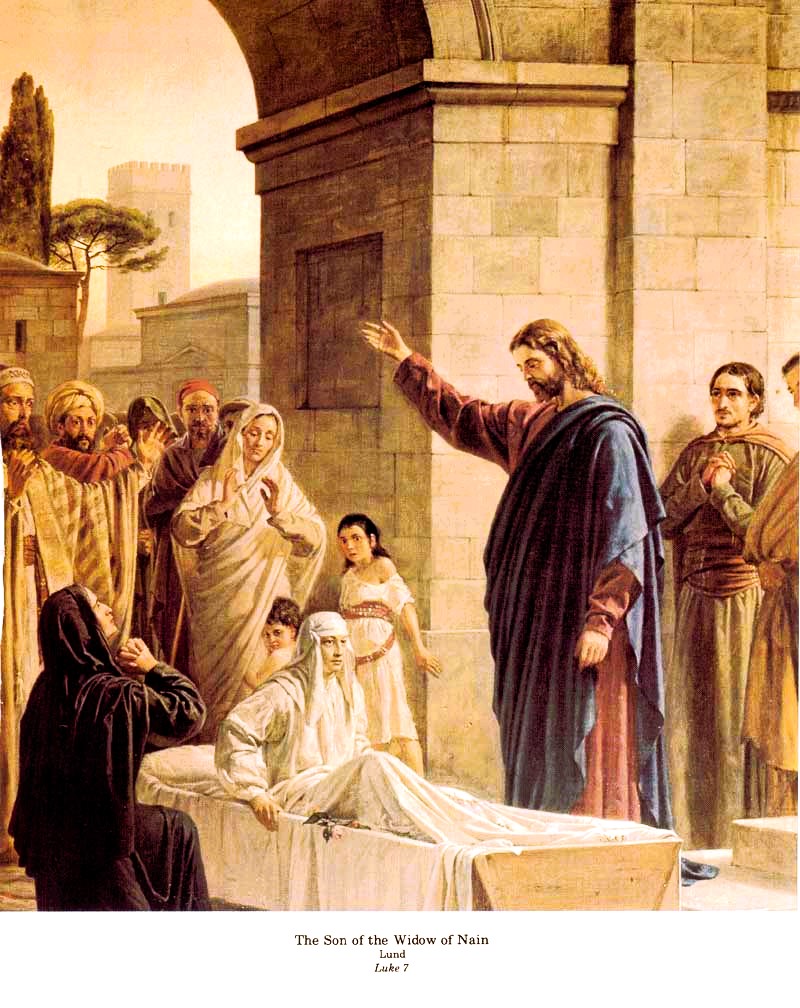
Then Jesus went up and touched the bier, and the bearers stood still. (Luke 7:14)
The Law was very clear: Whoever touches the dead body of any person shall be unclean for seven days. That’s Numbers 19:11.
It’s no wonder those who carried the body stopped when Jesus reached out.
Here was a rabbi with His disciples, and this Holy man was about to make Himself unclean by touching a corpse.
But this was no ordinary rabbi.
This was the Son of God through whom the world itself had been made.
He’d come to restore a world turned upside-down by sin and reverse the curse of that sin.
He’d come to transform the meaning of death.
When Jesus touched the bier, the impurity of death didn’t contaminate Him.
Instead, His purity overcame the decay of death.
The Lord speaks the words, “Young man, I say to you, arise.”
And the dead man sat up and began to speak, and Jesus gave him to his mother. (Luke 7:14–15)
At Christ’s word, life returned to the son.
Jesus reversed this procession of death so it became a celebration of life.
The depth of tragedy became the height of triumph.
Despair turned to joy.
When the people realized what Jesus had done, they recalled the prophets of old.
They remembered the story of Elijah we read in today’s Old Testament lesson.
They remembered that Elijah’s successor, Elisha, also raised a son from the dead.
And so, the people saw Jesus as a prophet like Elijah and Elisha.
In a way, they were right.
Jesus is a great prophet, the greatest of all.
But to say Jesus is a great prophet is not enough.
He’s much more.
We can see the difference when we compare the resurrections Jesus performed with other resurrections in the Bible.
[Elijah] stretched himself upon the child three times and cried to the Lord, “O Lord my God, let this child’s life come into him again.” And the Lord listened to the voice of Elijah. And the life of the child came into him again... (1 Kings 17:21–22)
When Elisha came into the house, he saw the child lying dead on his bed. So he went in and shut the door behind the two of them and prayed to the Lord. (2 Kings 4:32–33)
Peter put them all outside, and knelt down and prayed; and turning to the body he said, “Tabitha, arise.” (Acts 9:40)
Note that each prophet and Apostle prayed before they raised the dead.
In each case, it’s very clear they didn’t supply the life-giving power.
Instead, the power came from the one to whom they prayed … the Lord of creation.
Now examine the resurrection in today’s Gospel.
[Jesus] came up and touched the bier, and the bearers stood still.
“And he said, ‘Young man, I say to you, arise.’ And the dead man sat up and began to speak.” (Luke 7:14–15)
Jesus had no need to pray, for He Himself is God.
The writer of Hebrews said: He is the radiance of the glory of God and the exact imprint of his nature, and he upholds the universe by the word of his power. (Hebrews 1:3)
The Apostle John wrote: All things were made through him, and without him was not anything made that was made. (John 1:3)
As God, Jesus is the Lord of life and death and has no need to call on help from outside Himself.
When the people glorified God, saying, “God has visited his people,” (Luke 7:16), I wonder how many understood that Jesus Himself is God visiting His people.
Yet there’s more.
The Lord of Heaven and earth didn’t come to this world and take on human form just so He could visit people and raise one son from the dead.
He didn’t come just to feel the pain of this widowed mother.
He came to experience your pain.
He came to experience your grief.
The Holy Spirit inspired the writer of Hebrews to say, “For we do not have a high priest who is unable to sympathize with our weaknesses, but one who in every respect has been tempted as we are, yet without sin.” (Hebrews 4:15)
Jesus isn’t some far-off, powerful, but detached being.
He’s intimately familiar with all your pain, sorrow, and grief.
There’s nothing you experience that He doesn’t experience with you.
Isaiah wrote, “Surely he has borne our griefs and carried our sorrows.” (Isaiah 53:4)
You could say Jesus has empathy with you, but Christ has much more.
The word empathy has its roots in a Greek word meaning to suffer with someone.
Jesus doesn’t just suffer with you; He has suffered for you.
He took the sin of all mankind into His holy body and carried it to the cross.
On that cross He suffered the punishment we earned with our sin.
Therefore, you know that you won’t suffer that punishment.
He not only suffers the pain and grief of this world with you, but also frees you from the eternal pain, grief, and punishment of hell.
He’s gone way beyond empathy to sacrifice.
Jesus’ sacrifice for you ended in His death, but He didn’t remain in the grave.
He rose in triumph over sin, death, and the devil.
And with His triumph, Christ transformed the meaning of death.
Just as He called forth the widow’s son from death, He will, on the last day, raise you and other believers.
The son in today’s gospel is no longer with us.
He died again.
But the resurrection on the last day for Christians will mean eternal life in heaven.
For non-believers, it will mean eternal separation from God.
Today’s Gospel proclaims that Jesus experiences your life with you.
He rejoices at the highs; He endures the lows.
Through His death and resurrection, Christ has transformed the grave into a doorway to new life.
To Him be all glory, honour and praise, now and forever.
THE FIFTEENTH SUNDAY AFTER TRINITY
September 13, 2026
Pastor Tom Steers
Christ the Saviour Lutheran Church, Toronto
Our Bible Readings:
... View MoreTHE FIFTEENTH SUNDAY AFTER TRINITY
September 13, 2026
Pastor Tom Steers
Christ the Saviour Lutheran Church, Toronto
Our Bible Readings:
Old Testament – 1 Kings 17:8-16
Psalm 146
Epistle – Galatians 5:25-6:10
Gospel – Matthew 6:24-34
Our Hymn of the Day from Lutheran Service Book is LSB 722, “Lord, Take My Hand and Lead Me” https://www.youtube.com/watch?v=6Cz0GLuUC2U&list=RD6Cz0GLuUC2U&start_radio=1
The Sermon –
Our Gospel reading today brings us into the heart of Jesus’ teaching on trust.
A trust not in ourselves, nor in earthly security, but in the Father who sent His Son to redeem us.
A trust in the Lord, who now sustains us in every need of body and soul.
Christ’s words are familiar: “Do not be anxious,” “Look at the birds,” “Consider the lilies,” “Seek first the kingdom of God.”
Yet we must consider these words with care.
Jesus is not calling His followers to irresponsibility, laziness, or a withdrawal from daily duties.
He is calling us to a life ordered by faith, shaped by the Gospel, and freed from the crushing burden of self reliance.
To understand this rightly, we need to begin where Jesus does: “No one can serve two masters.”
The question is not whether we work, plan, or labour.
The issue is whom we trust.
Anxiety, in the biblical sense, is not merely an emotion; it is misplaced faith. It is the heart’s attempt to secure life apart from God’s promises.
Jesus exposes this false trust so He may replace it with true trust — faith in the Father who clothes the lilies and feeds the birds. Faith in the Father’s only Son, given for our salvation.
This Christ-centered trust is the foundation of the Christian life.
Through God’s Word and Sacraments, the Holy Spirit brings us to repentance and works faith in us.
He unites us to Christ, who has fulfilled the Law, borne our sin, and conquered death.
In Christ we are justified — declared righteous before God. And because we are justified, we are free.
Martin wrote in “The Freedom of a Christian”: “A Christian is a perfectly free lord of all, subject to none; a Christian is a perfectly dutiful servant of all, subject to all.” (LW 31:344)
This paradox is essential for understanding Jesus’ teaching in Matthew Chapter 6.
The Christian is fully free — free from the Law’s condemnation, free from fear of death, free from the anxiety of earning God’s favour.
Christ has done all.
At the same time, the Christian becomes a servant — gladly, willingly, joyfully — because through the work of the Holy Spirit in our lives, faith produces works of love.
This dual nature of Christian freedom shines through our readings today.
In 1st Kings 17, the widow of Zarephath stands as a living example of faith under pressure.
She has nothing — only a handful of flour and a little oil.
Yet the Word of the Lord comes through Elijah: “Do not fear.”
The promise is clear: “The jar of flour shall not be spent, and the jug of oil shall not be empty.”
The widow does not then act out of reckless abandon, but out of trust in the God who speaks.
Her faith isn’t passive; it’s active. She bakes bread. She serves Elijah. She continues in her vocation. But she does so trusting that the Lord will provide.
This is precisely what Jesus teaches in Matthew 6. Faith does not eliminate work; faith sanctifies work. Faith does not remove responsibility; faith frees responsibility from fear.
Psalm 146 reminds us that trust in earthly rulers, systems, or securities is ultimately misplaced.
“Put not your trust in princes,” the psalmist cautions, “in whom there is no salvation.” Instead, trust in the Lord “who keeps faith forever,” “who executes justice,” “who gives food to the hungry.”
The psalmist’s trust is grounded in God’s character — His steadfast love, faithfulness, and covenant mercy.
This is the God who feeds the birds and clothes the lilies of the field. This is the God who sent His Son to redeem us and promises daily bread and eternal life.
Paul’s words in our reading from Galatians shaped Luther’s teaching. “If we live by the Spirit, let us also walk by the Spirit.”
Christian freedom isn’t an escape from moral responsibility; it is the transformation of moral responsibility.
Human works do not save, but faith produces works.
The Christian, secure in Christ, is now free to “bear one another’s burdens,” to “do good to everyone,” and especially to “those who are of the household of faith.”
This is the life Jesus describes in Matthew 6.
The Christian does not serve two masters. He serves one — Christ — and is therefore freed from the tyranny of anxiety. Freed from fear, he is free to love compassionately.
Jesus’ teaching culminates in the command: “Seek first the kingdom of God and His righteousness, and all these things will be added to you.”
Yet Jesus is not saying, ‘If you seek God, then He will reward you.”
Jesus’ words are spiritual truth.
When Christ is your righteousness, when His kingdom is your treasure, when His salvation is your confidence, then everything else falls into its proper place.
The Christian still works, plans, saves, and labours. But he does so without fear.
Anxiety is replaced by trust. Worry is replaced by prayer. Self reliance becomes reliance on Christ.
The lilies and birds are not idle. They do what God created them to do. Yet they do not worry.
So, also with the Christian.
We fulfill our vocations — parent, worker, student, citizen, neighbour — not to secure our salvation, but because salvation has already been secured.
Jesus’ words, then, are a call to faith.
Dear brothers and sisters, your heavenly Father knows what you need.
He knows our fears, burdens, uncertainties, and hardships.
And He who did not spare His own Son will not fail to love you.
Christ’s cross is the guarantee of the Father’s care.
His resurrection is the believer’s certainty of salvation.
His Word and Sacraments are the means by which the Spirit sustains you.
You are not alone, not forgotten. We are not left to fend for ourselves.
Seek first the kingdom—not because you must earn it, but because it has already been given to you in Christ.
His provision is for now and for life eternal.
THE BIBLE STUDY –
September 12, 2026
Pastor Tom Steers
Christ the Saviour Lutheran Church, Toronto
-- A Confessional Lutheran Church
... View MoreTHE BIBLE STUDY –
September 12, 2026
Pastor Tom Steers
Christ the Saviour Lutheran Church, Toronto
-- A Confessional Lutheran Church
Our readings this Saturday from the daily lectionary are 2nd Chronicles 31:1–21 and Philippians 4:1–23.
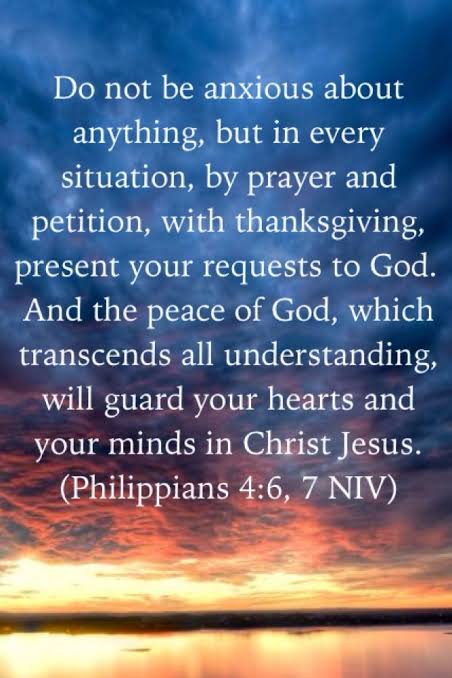
The Apostle Paul’s exhortation in Philippians 4:6–7 stands as one of the most tender and strengthening words given to the Church: “Do not be anxious about anything, but in everything by prayer and supplication with thanksgiving let your requests be made known to God. And the peace of God, which surpasses all understanding, will guard your hearts and your minds in Christ Jesus.”
These verses are not mere encouragement; they are promises anchored in the crucified and risen Lord who has already borne our sin, our fear, and secured our future.
In our Old Testament text, Hezekiah leads Judah to renewed, faithful worship. Idols are torn down, the priesthood is restored, and people donate properly to the temple.
This revived devotion isn’t grounded in the people’s strength, but in the Lord who had shown mercy to His people. Their obedience flows from trust in God’s steadfast care.
The Apostle Paul’s words in Philippians echo the same truth: the Lord who has redeemed His people is the One who sustains them.
Anxiety is not conquered by human resolve, but by the gracious invitation to bring every need before God in prayer.
Thanksgiving accompanies supplication because Christians know the character of their Triune God — the Father who has given His Son for us and the Holy Spirit who calls, enlightens, and sanctifies.
Reformer Martin Luther commented on this passage with pastoral clarity: “It is the nature of faith to expect everything good from God and to take refuge in Him alone.” (Lectures on Philippians, 1529, Luther’s Works, vol. 25, p. 362).
Luther’s insight rests in Paul’s promise: faith casts its cares upon God because faith knows God’s goodness in Christ.
The peace that surpasses understanding is not an inner feeling we generate; it is Christ Himself guarding us. His peace is objective, given, bestowed. It is the peace of sins forgiven, death defeated, and the devil conquered. It is the peace that accompanied Paul in prison, sustained the saints of Judah in their reforms, and today keeps the Church steadfast in prayer.
The Christian life is shaped by confident petition and grateful trust. We pray because Jesus commands it; we give thanks because Christ has already supplied all things needful; and we rest because Christ Himself is our peace.
Prayer:
Lord Jesus Christ, You invite us to bring every care before You in prayer.
Grant us faith to trust Your promises and give praise for daily mercies.
Guard our hearts and minds with Your peace, now and always. Amen.
Our Hymn for the Day from Lutheran Service Book is LSB 752, “Be Still, My Soul”
https://www.youtube.com/watch?v=rqDSZHDhenY&list=RDrqDSZHDhenY&start_radio=1
page=1&profile_user_id=160640&year=&month=
Load More