MISSION OBSERVANCE SUNDAY
November 8, 2026
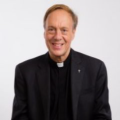
Pastor Tom Steers
Christ the Saviour Lutheran Church, Toronto
- A Confessional Lutheran Church
Our Bible Readings:
Old Testament – Isaiah 62:1-7
Psalm 96
Epistle – Romans 10:11-17
Gospel – Luke 24:44–53
Our Hymn of the Day from Lutheran Service Book is LSB 823, “May God Bestow on Us His Grace,” by Martin Luther
https://www.youtube.com/watch?v=KnhQJ8m3B3o&list=RDKnhQJ8m3B3o&start_radio=1
The Sermon –
Dear brothers and sisters in Christ, what is the mission of the Church?
Why does it exist?
What has God called us to do in this world?
Some say the assembly exists to serve those in need or provide a place for fellowship.
While these things can certainly be good and worthwhile, they are not the central objective Christ has given His Church.
Our Lord Himself explains what that mission is in today's Gospel reading: "Thus it is written, that the Christ should suffer and on the third day rise from the dead, and that repentance for the forgiveness of sins should be proclaimed in His name to all nations, beginning from Jerusalem."
This is the purpose of the true Church. To declare Christ crucified and risen, and proclaim repentance and the forgiveness of sins in His name to all nations.
Notice this mission does not begin with us. It begins with God.
In our First Reading from Isaiah, the Lord says: "For Zion's sake I will not keep silent, and for Jerusalem's sake I will not be quiet, until her righteousness goes forth as brightness, and her salvation as a burning torch."
It is the Lord who speaks; the Almighty who acts.
The Lord establishes His people and gives them a new identity.
Human beings do not establish their own righteousness or make themselves worthy of God’s favour.
The Lord Himself provides for their salvation.
What a wonderful promise for sinners like us!
We have nothing to boast about before God.
Our thoughts, words, and actions continually reveal our sinfulness.
We cannot make ourselves righteous through our ‘good works’, religious activities, or human efforts.
We do not “make a decision for Christ” or ascend to Him.
The Lord has provided the righteousness we need through His only Son, Jesus.
God decided to descend to us and took on human flesh.
Through Christ's innocent suffering and death upon the cross, our sins have been atoned for.
Through His glorious resurrection, death was conquered and everlasting life secured for all who believe in Him.
This salvation is not intended for one nation or one particular people.
Isaiah declares that "the nations shall see your righteousness, and all the kings your glory."
This is why Psalm 96 calls upon God's people to “sing to the Lord a new song; sing to the Lord, all the earth! Sing to the Lord, bless His name; tell of His salvation from day to day. Declare His glory among the nations, His marvelous works among all the peoples!"
Having received God's salvation, His people cannot help but praise what He has done.
We do not proclaim our own achievements or goodness. We extol the Lord's salvation.
The Psalmist also reminds us why this message is important.
The ‘gods’ of the nations are worthless idols, but the Lord made the heavens.
The world is filled with false belief and empty promises of glory.
Human beings continually look for new ways to overcome their guilt, find meaning in life, and secure their future.
Yet no human philosophy, religious system, or personal achievement can reconcile sinners to God.
Only Christ does that.
This brings us to St. Paul’s words in our Epistle reading from Romans Chapter 10.
The Apostle declares: "For there is no distinction between Jew and Greek; for the same Lord is Lord of all, bestowing His riches on all who call on Him. For 'everyone who calls on the name of the Lord will be saved.'"
Here is the wonderful universality of the Gospel.
Salvation is offered to all people, regardless of their nationality, background, or circumstances.
Christ died for the sins of the whole world.
Now His saving Gospel is to be proclaimed to all.
Then Paul asks a series of questions that go to the very heart of Christian mission.
"How then will they call on Him in whom they have not believed? And how are they to believe in Him of whom they have never heard? And how are they to hear without someone preaching? And how are they to preach unless they are sent?"
Paul’s teaching is crucial.
People cannot believe in Christ unless they hear about Him. They cannot hear unless someone speaks the Gospel to them.
This is why God established the Church, where the word of God is properly preached and taught and the Sacraments correctly administered. Through these means of grace, the Holy Spirit creates saving faith.
Faith doesn’t arise from some natural spiritual ability within us.
Nor does it self-generate from an independent human decision to accept Jesus.
The Scriptures teach that we are spiritually dead in our sins and cannot, by our own reason or strength, believe in Jesus Christ or come to Him. (Ephesians 2:1-3)
Martin Luther reminds us in his explanation of the Third Article of the Apostles' Creed (The Large Catechism) that “neither we nor anyone else could know Christ or believe in Him unless the Holy Spirit brought Him to us and granted faith through the preaching of the Gospel.”
This is why Paul concludes: "So faith comes from hearing, and hearing through the word of Christ."
What wonderful gifts God has given His Church!
Through the preaching of the Gospel, the Holy Spirit works faith in the hearts of sinners.
Through Baptism, He brings us into Christ's Church and places His name upon us.
Through Absolution, He announces the forgiveness of our sins.
Through the Lord’s Supper, Christ gives us His true body and blood for the forgiveness of sin and strengthens our faith.
These are the Means of Grace through which God continues His saving work among us.
In today’s Gospel passage, Jesus speaks to His disciples after the resurrection.
He reminds them that everything written about Him in the Law of Moses, the Prophets, and the Psalms must be fulfilled.
Our Saviour then opens their minds to understand the Scriptures.
What does He teach them?
"That the Christ should suffer and on the third day rise from the dead, and that repentance for the forgiveness of sins should be proclaimed in His name to all nations, beginning from Jerusalem."
The mission of the Church is described in a single sentence from our Lord.
The message is Christ's suffering, death, and resurrection. The message is repentance and the forgiveness of sins. And the message is to be proclaimed to all nations.
Notice that Jesus does not tell His disciples to accomplish this mission through their own strength.
He promises them the gift of the Holy Spirit: "And behold, I am sending the promise of My Father upon you. But stay in the city until you are clothed with power from on high."
The disciples needed the promised Spirit, which descended upon them at Pentecost.
Real mission is not achieved through human wisdom, persuasive techniques, or marketing strategies.
It is accomplished through the powerful Word of God that the Holy Spirit uses to create and sustain faith.
This provides great comfort as we consider our own congregation's mission.
We may feel small, that resources are limited, that the challenges of ungodly, secular times are too great.
We live in a world where many have little knowledge of the Christian faith, and where the Gospel is often ignored or opposed.
But the success of God's mission does not rely upon human strength. It depends upon the Lord who sends His Word and promises to work through it.
That doesn’t mean we have no responsibility.
Every Christian has a part to play in the Church's mission.
We support the preaching of the Gospel through our prayers, offerings, and encouragement.
We confess Christ in our daily vocations, in our homes, workplaces, and communities.
We speak of the hope that is ours through Jesus Christ.
And we pray the Lord will continue to send faithful Pastors, missionaries, and teachers to proclaim His saving Word throughout the world.
But we must never lose sight of what we are proclaiming.
We are not simply inviting people to become better citizens or more perfect people.
We are proclaiming Christ crucified for their sins.
That He has risen from the dead.
And that through faith in our Saviour we receive forgiveness, life, and eternal salvation.
Finally, Luke tells us Jesus led His disciples out as far as Bethany, lifted His hands, and blessed them. Then He was carried up into heaven.
How did the disciples respond? Luke writes, "they worshiped Him and returned to Jerusalem with great joy, and were continually in the temple blessing God."
That same joy belongs to us.
We have received the saving Gospel.
We have been baptized into Christ.
We have heard the wonderful announcement that our sins are forgiven for His sake.
And we have the privilege of sharing this same Good News with others.
May our Lord continue to bless us, strengthen us in our confession of Christ, and grant that His saving Gospel may be proclaimed faithfully among all nations.
For the Christ who suffered, rose again, and ascended into Heaven, reigns, and will come again in glory.
In Album: Pastor Tom Steers's Timeline Photos
Dimension:
960 x 720
File Size:
171.91 Kb


Be the first person to like this.

Jason
That's some seriously naive bullshit and we now objectively know Christianity to be a farce created by the Roman in a vain attempt to get the Jews to act right. https://a.co/d/06EAY2ov You are lost but tell other lost people that you know how to be found.
Caesar's Messiah: The Roman Conspiracy to Invent Jesus: Flavian Signature Edition: Atwill, Joseph: 8601404677632: Amazon.com: Books
a.co