THE TWENTY-FIRST SUNDAY AFTER PENTECOST
October 18, 2026
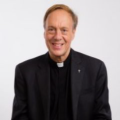
Pastor Tom Steers
Christ the Saviour Lutheran Church, Toronto
Our Bible Readings:
Old Testament – Isaiah 45:1-7
Psalm 96
Epistle – 1 Thessalonians 1:1-10
Gospel – Matthew 22:15-22.
Our Hymn of the Day from Lutheran Service Book is LSB 655, “Lord, Keep Us Steadfast in Your Word,” by Martin Luther
HTTPS://WWW.YOUTUBE.COM/WATCH?V=S8VIZI7M5P4&LIST=RDS8VIZI7M5P4&START_RADIO=1
THE SERMON –
The Two Kingdoms
“Render to Caesar the things that are Caesar’s, and to God the things that are God’s.”
With these words, our Lord Jesus Christ answers a question designed to trap Him.
Yet His answer does more than settle a dispute about paying taxes.
It teaches us about the authority of earthly government, our responsibilities as citizens, and, most importantly, our relationship with the one true God.
Some Pharisees and the Herodians approach Jesus with a question that appears innocent enough: “Is it lawful to pay taxes to Caesar, or not?”
The Apostle Matthew tells us, though, that the motivation is entrapment, not curiosity.
If Jesus supports paying the Roman tax, He risks alienating those who resent Roman occupation.
If He opposes it, His enemies can accuse Him of rebellion against Rome.
Either answer seems likely to bring trouble.
They begin with flattering words: “Teacher, we know that you are true and teach the way of God truthfully.”
Their praise is insincere. They are not seeking the truth. They want to silence the One who speaks it.
Jesus sees through their hypocrisy.
He asks them to show Him the coin used for the tax.
When they bring Him a denarius, He asks, “Whose likeness and inscription is this?” They answer, “Caesar’s.”
Then comes His remarkable reply: “Therefore render to Caesar the things that are Caesar’s, and to God the things that are God’s.”
Earthly government has a legitimate place in God's ordering of the world.
The Roman emperor was no friend of the Jewish people.
Rome exercised its power over the land, demanded taxes, and maintained its rule through military strength and frequent brutality.
Nevertheless, Jesus does not command His hearers to reject civil authority simply because the government is pagan or its rule unwelcome.
The denarius bears Caesar’s image and inscription.
Jesus explains that earthly obligations are not to be dismissed because those who govern are imperfect.
This does not mean that every action of every government is just, or that civil authority possesses unlimited power.
Rather, earthly authority has a God-given purpose: to maintain order, restrain wrongdoing, administer justice, and preserve peace in human society.
Our Old Testament reading helps us understand this truth.
The Lord speaks prophetically through Isaiah of Cyrus, the Persian king, as His “anointed.”
Cyrus did not know the Lord as the true God.
Nevertheless, God used him as His instrument to deliver His people from Babylonian captivity and restore them to their homeland.
The Lord declares, “I am the LORD, and there is no other, besides me there is no God.”
Even rulers who do not acknowledge Him remain under His authority; God's purposes are not defeated by their unbelief.
Governments change, political leaders rise and fall, and nations experience prosperity and adversity.
Yet the Lord remains sovereign over all.
As Christians, we therefore have responsibilities toward the earthly society in which God has placed us.
We are to pay our taxes, obey lawful authorities, respect those who govern, and serve our neighbours through our daily vocations.
Yet earthly authority must never take the place of God.
Caesar may have a legitimate claim upon the coin, but he does not possess the authority of the Almighty.
The emperor is not the Creator or the Redeemer.
He cannot forgive our sins or grant us eternal life.
Here we encounter the Lutheran teaching concerning the Two Kingdoms.
God rules His earthly kingdom through civil authority, law, and the institutions that preserve outward order.
He rules His spiritual kingdom through the Gospel, the forgiveness of sins, and the ministry of His Word and Sacraments.
These two forms of God's rule must not be confused.
The Church does not establish faith through political power or physical force.
Faith is created by the Holy Spirit through the Gospel.
Nor may the state prohibit or interfere with the Church's proclamation of God's Word or violate God’s Commandments.
Christians live in both kingdoms.
We are citizens of an earthly country, with responsibilities toward our neighbours and society.
At the same time, through faith in Christ, we belong to the Kingdom of Heaven.
Our earthly citizenship matters, but it is not ultimate.
We rightly respect our government, but our highest fear, love, and trust belong to God alone.
If earthly authorities command us to do what contradicts God's Word, we must obey God rather than men.
Psalm 96 reminds us why: “For great is the LORD, and greatly to be praised; he is to be feared above all gods.”
The psalm declares that the idols of the nations are worthless, but the Lord made the heavens.
Political power, military strength, and human wisdom can all become idols when we place our ultimate confidence in them instead of the living God.
The question is not merely whether we render proper payment to Caesar. It is whether we render to God the worship, trust, and obedience that belong to Him alone.
Jesus' words confront us with the demands of God's Law.
The coin bears Caesar's image. But what bears God's image?
Human beings.
Genesis Chapter 1 tells us God created mankind in His own image.
We belong to our Creator.
Our lives, bodies, minds, and souls are gifts from His hand.
God does not merely claim a portion of our possessions or a few hours of our time.
He rightly claims our whole being.
What, then, have we rendered to Him?
Have we feared, loved, and trusted in God above all things?
Have we loved our neighbours as ourselves?
Have we placed our confidence in God's promises, or instead trusted more deeply in possessions, political leaders, and our own wisdom?
We may faithfully pay taxes and fulfil outward responsibilities, yet still fail to love God with our whole heart.
God's Law exposes our sin.
We have not rendered to Him the perfect obedience He deserves.
We have not loved our neighbours as ourselves.
We stand guilty before our Holy Lord.
If our salvation depended upon our own righteousness, we would have no hope.
But the Gospel brings us to Jesus Christ, who has accomplished for us what we could never do for ourselves.
Jesus doesn’t merely tell us what we owe God.
He is the One who perfectly rendered to the Father everything that belonged to Him.
Throughout His earthly life, Jesus fulfilled His Father's will without sin.
Where we have been disobedient, He was obedient. Where we have failed to trust God, He remained faithful.
Then He went to the cross, for us, for our transgressions.
At Calvary, the sinless Son of God bore the judgment our disobedience deserved.
He gave His life for sinners who had failed to render to God the honour, love, and obedience that belong to Him.
On the third day, He rose from the dead, defeating sin, death, and the power of the devil.
Our salvation depends not upon our accomplishments, ‘decision’, or efforts to make ourselves worthy before God.
It rests upon the finished work of Jesus Christ.
Through the Gospel, the Holy Spirit brings us to faith in Christ and grants us forgiveness.
Through Baptism, we are joined to Christ and given the promise of new life.
Through the preached Word and Holy Absolution, our Lord delivers His forgiveness to troubled consciences.
At His altar, He gives us His true body and blood for the forgiveness of sins.
These are God’s means of grace.
In our Epistle, Paul gives thanks for the Thessalonians because they received the Gospel “not only in word, but also in power and in the Holy Spirit and with full conviction.”
Their faith produced a life of trust in God, love, and hope.
They turned from pagan idols to serve “the living and true God” and waited for His Son from heaven, Jesus, “who delivers us from the wrath to come.”
That is also our calling.
Having received God's mercy, we turn away from the false gods that would claim our hearts.
We serve our neighbours in our daily vocations, endure affliction with the help of the Holy Spirit, and await the return of our Saviour.
We do not serve our neighbours to purchase God's favour.
We serve because, in Christ, God has already shown us His favour.
Good works are the fruit of faith, not the price of salvation.
Psalm 96 declares that the Lord comes “to judge the earth.”
For those who belong to Christ, the coming Judge is also our Redeemer.
He is the One who alone bore our judgment upon the cross and rose again for our justification.
Dear Christians, render to Caesar what belongs to Caesar.
Fulfil your earthly responsibilities, honour lawful authority, and serve your neighbours faithfully.
But render to God what belongs to God.
Give Him your worship, trust, and allegiance.
When His Law exposes your failures, do not seek refuge in your own righteousness.
Look to Jesus, who has fulfilled God's will for you and given Himself for your salvation.
Yet when we face Christian persecution,
when governments deny the sanctity of life from conception to its natural end,
when we are told that marriage is anything other than the union of one biological male to one biological woman – speak out.
Acting as Christians, stand your ground.
Defend the faith.
Remember the words of the Apostle Peter: “We must obey God rather than men.”
May the grace of our Lord Jesus Christ, and the love of God, and the fellowship of the Holy Spirit be with you now and forever.
In Album: Pastor Tom Steers's Timeline Photos
Dimension:
640 x 480
File Size:
57.5 Kb


Be the first person to like this.