THE THIRD SUNDAY OF EASTER
April 19, 2026
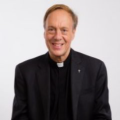
Pastor Tom Steers
Christ the Saviour Lutheran Church, Toronto
-- A Confessional Lutheran Church
OPENING HYMN: 466 “Christ Has Arisen, Alleluia”
Pastor: Halleluiah, Christ is risen!
Congregation: He is risen indeed. Halleluiah!
Confession and Absolution Page 184-185 of our Hymnal
The Verse (from Romans 6:9; John 20:29b)
Alleluia. We know that Christ being raised from the dead will never die again; death no longer has dominion over Him. Alleluia.
Did not our hearts burn within us while he talked to us on the road, while he opened to us the scriptures. Alleluia.
The Salutation – Pastor: The Lord be with you. Congregation: And also with you.
Collect Prayer:
O God, through the humiliation of Your Son You raised up the fallen world. Grant to Your faithful people, rescued from the peril of everlasting death, perpetual gladness and eternal joys; through Jesus Christ, our Lord, who lives and reigns with You and the Holy Spirit, one God, now and forever. Amen.
Our Bible Readings:
First Reading – Acts 2:14a, 36-42
Psalm 116:1-14 (antiphon: v.5) Epistle Reading – 1st Peter 1:17-25
Gospel Reading – Luke 24:13-35
THE APOSTLES’ CREED Page 192
HYMN OF THE DAY: 627 “Jesus Christ, Our Blessed Saviour”
https://www.youtube.com/watch?v=J1QxrWUqEsw&list=RDJ1QxrWUqEsw&start_radio=1
THE SERMON –
Christ is risen. He is risen indeed. Alleluia!
On the first Easter afternoon, two disciples walked down a road to Emmaus with heavy hearts.
They had heard rumors of resurrection, but they could not yet believe.
Their world had collapsed on Friday, and though the tomb was empty, their hope was still buried.
They walked away from Jerusalem—away from the place where Christ had promised life—because they couldn’t yet see what God had done.
Then Jesus came and walked with them.
But they didn’t recognize Him.
This is one of the most striking features of the Emmaus account.
The risen Christ is right there—walking beside them, speaking to them, opening the Scriptures—and yet they don’t know Him.
Their eyes are kept from recognizing Him.
Not because He’s absent, but because He is present in a new way.
St. Augustine once preached on this passage and said, “They did not recognize Him while He was speaking; but when He broke the bread, then their eyes were opened.”
Augustine went on to say that Christ teaches us here to “recognize Him in the breaking of the bread.”
The Saint was not inventing a new idea; he was receiving what Luke tells us.
Christ is known in the Scriptures, and Christ is known through His Sacraments.
This is the pattern of the Church’s life.
This is the pattern of our life in Christ.
The two disciples are confused, disappointed, and spiritually blind.
They know the facts of the Gospel, but they can’t yet see the meaning.
They can’t yet see the victory.
For Christ, for us.
And so, Jesus comes to them.
He doesn’t wait for them to climb out of their doubt.
He doesn’t wait for them to understand or to find Him, or to make a “decision” for Him.
He finds them.
This is how Christ always works.
He comes to us in our weakness, in our confusion, sorrow, and in our sin.
He comes to us through His Word, even when our hearts are slow to believe.
And He comes to us in His Sacraments, even when our eyes are dim.
The Emmaus road is not just the story of two disciples.
It is ours.
Jesus begins by opening the Scriptures to them.
He preaches Himself from Moses and the Prophets.
He shows them that the Christ must suffer and enter His glory.
And He instructs them that the cross was not a failure, but the fulfillment of God’s plan.
As Jesus speaks, something happens inside them.
“Did not our hearts burn within us,” they later say, “while He opened to us the Scriptures?”
This is what the Word of God does.
It sets the heart aflame.
It reveals Christ, creates faith.
It drives away despair and shows us that the crucified One is the risen One.
Martin Luther once preached on this text and said, “Here Christ is made known in the breaking of the bread, as He has commanded us to do in His Supper. Thus He reveals Himself to us also, not in His bodily form, but in the Sacrament.”
Luther’s point is simple: Christ shows Himself through the means He has chosen—through the Word and Sacrament that opens eyes.
The disciples’ hearts burn with the Word.
But they still don’t recognize Him.
Not yet.
When they reach Emmaus, Jesus acts as though He will walk on.
But they urge Him: “Stay with us.”
And He does.
He reclines at table with them.
He takes bread, blesses it, breaks it, and gives it to them.
And in that moment—their eyes are opened.
They recognize Him.
Then He vanishes from their sight.
Why does He vanish?
Because they no longer need to see Him with their eyes.
They have seen Him where and how He wills to be seen.
Martin Chemnitz, the great Lutheran theologian of the second generation, wrote on this passage saying, “Christ was recognized by the disciples in the breaking of the bread, which the ancient church rightly understood as a testimony of His presence in the Lord’s Supper.”
Chemnitz is not saying that the Emmaus meal is the institution of the Lord’s Supper.
That happened on the evening of Holy Thursday.
But he’s saying that the Church has always seen here a pattern, a testimony: Christ reveals Himself sacramentally.
The Word opens the heart.
The Sacrament opens the eyes.
This is not an accident.
This is the shape of Christian worship.
It is the shape of our Divine Service.
And it is the shape of your life in Christ.
The risen Jesus isn’t recognized by sight.
He’s recognized by faith.
And faith is created and sustained by the means of grace.
You do not walk that dusty road to Emmaus, but Christ still walks with you.
We don’t sit at that table, but Christ feeds you at His table in Communion.
We don’t see Him with our eyes, but we hear Him in His Word and receive Him in His Supper.
This is not metaphor.
Nor a symbol.
Nor a memory.
This is real presence.
The same Christ who broke bread for them gives you His own true body and blood for the forgiveness of sins.
When we come to the Lord’s Supper, we are not reenacting Emmaus.
Yet we are living in the same reality.
Christ is here.
Christ is present.
He is giving Himself to you.
And our eyes are opened—not to see Him with earthly sight, but to recognize Him in faith.
The disciples don’t stay in Emmaus.
They rise that very hour and return to Jerusalem.
They go back to proclaim the risen Christ.
This is what the Word and Sacrament do.
They work faith within us.
They fill us with joy that we are forgiven freely for Christ’s sake.
They give us a message to share.
“We have seen the Lord,” the disciples say.
And so do you.
We have seen Him in the Scriptures, and in the breaking of the bread.
We have seen Him in the forgiveness of our sins and in the life He gives.
And now, you go out into the world—not alone, nor in sorrow, not in confusion, but with Christ walking beside you and dwelling within you.
The Emmaus account is the story of how Christ deals with His Church today.
He comes to us in our weakness.
He strengthens faith and sends us out with joy.
Your risen Lord is not far away.
He is present in His means of grace within the Church.
And so, we pray with the Emmaus disciples: “Stay with us, Lord.”
And He does.
In this life, and for eternity.
PRAYERS OF THE CHURCH
THE SERVICE OF THE SACRAMENT
P: Blessed are You O Lord, our God, king of the universe, for you have had mercy on us and given Your only-begotten Son that whoever believes in Him should not perish but have eternal life.
C: We give You thanks Father for the redemption You have prepared for us through Jesus Christ. Grant us Your Holy Spirit that we may faithfully take communion and receive the blessings of forgiveness, life, and salvation that come from the body and blood of Christ.
P: Father, hear us as we pray as Jesus taught us.
LORDS PRAYER
C: Our Father, who art in heaven, hallowed be Thy name, Thy kingdom come, Thy will be done on earth as it is in heaven; give us this day our daily bread; and forgive us our trespasses as we forgive those who trespass against us; and lead us not into temptation, but deliver us from evil. For Thine is the Kingdom, and the power and the glory, forever and ever. Amen.
Preface
P: The Lord be with you.
C: And also with you.
P: Lift up your hearts.
C: We lift them to the Lord.
P: Let us give thanks to the Lord our God.
C: It is right to give Him thanks and praise.
P: It is truly meet, right, and salutary, that we should at all times, and in all places, give thanks to you, O Lord, Holy Father, Almighty and Everlasting God.
For in the mystery of the Word made flesh, You have given us a new revelation of Your glory; that seeing You in the Person of Your Son, we may be drawn to the love of those things which are not seen.
THE WORDS OF OUR SAVIOUR INSTITUTING THE LORD’S SUPPER – PAGE 197
P: The peace of the Lord be with you always.
C: Amen.
Lamb of God (Agnus Dei)
P: Lamb of God You take away the sin of the world,
C: Have mercy on us.
P: Lamb of God You take away the sin of the world,
C: Have mercy on us.
P: Lamb of God You take away the sin of the world,
C: Grant us peace.
The Distribution
(Our hymn during distribution is 636 “Soul Adorn Yourself with Gladness”)
Post Communion Collect (Left-hand column) Page 201 of our Hymnal
Salutation and Benedicamus Page 201
Benediction Page 202
OUR CLOSING HYMN: 644 ”The Church’s One Foundation”
In Album: Pastor Tom Steers's Timeline Photos
Dimension:
1124 x 750
File Size:
107.38 Kb


Be the first person to like this.