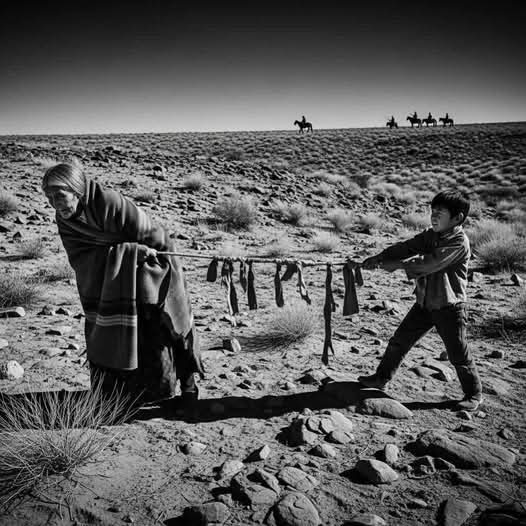
During the brutal 1864 Long Walk, when U.S. soldiers forced thousands of Navajo people to march 300 miles to Bosque Redondo, twelve-year-old Kee Begay watched soldiers shoot those who fell behind. Whe... View MoreDuring the brutal 1864 Long Walk, when U.S. soldiers forced thousands of Navajo people to march 300 miles to Bosque Redondo, twelve-year-old Kee Begay watched soldiers shoot those who fell behind. When his elderly grandmother could no longer walk, the soldiers ordered the family to leave her.
Kee quietly tied a rope from their last blanket around her waist and around his own small shoulders. All day and into the freezing night he pulled her forward, step by painful step, while soldiers shouted at him to hurry. He sang the old protection songs his grandmother had taught him so she would not feel alone.
Many did not survive that march, but Kee’s grandmother lived to see the return to their homeland in 1868. Years later she told the clan: “The soldiers took our land, but my grandson carried our future on his back.”