THE NINETEENTH SUNDAY AFTER PENTECOST
October 4, 2026
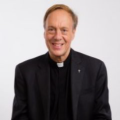
Pastor Tom Steers
Christ the Saviour Lutheran Church, Toronto
Our Bible Readings:
Old Testament – Isaiah 5:1-7
Psalm 80:7-19
Epistle – Philippians 3:4b-14
Gospel – Matthew 21:33-46
Our Hymn for the Day from Lutheran Service Book is LSB 644, “The Church’s One Foundation” https://www.youtube.com/watch?v=Lh_shvHCLTA&list=RDLh_shvHCLTA&start_radio=1
THE SERMON –
‘Christ, the Cornerstone’
Brothers and sisters, peace, grace, and mercy be to you from God our Father, and our Lord and Saviour Jesus Christ. Amen.
In today’s Gospel text, our Lord tells a parable that cuts to the heart of Israel’s history, and points to every sinner’s rebellion, then and now.
It begins as an earthly story: “There was a landowner who planted a vineyard, put a fence around it, dug a winepress, and built a watchtower.”
This is no random image.
It’s almost a direct quotation from the prophet Isaiah, Chapter 5, where the vineyard represents Israel—the people whom God had chosen, loved, and nurtured.
The vineyard is God’s beloved Church, His people of promise.
God Himself planted and cared for it and expected it would bear fruit.
But when harvest time came, and the landowner sent servants to collect some of the crop, the tenants seized them.
The servants here represent the Old Testament prophets and the New Testament Apostles.
They beat one, killed another, and stoned others.
So, the owner, God, sent more servants, and the tenants did the same.
Finally, he sent His Son, thinking, “They will respect Him.”
But the tenants conspired and said, ‘This is the heir. Let us kill him, and have the inheritance.’
And they did.
Then Jesus asks the question: “When the owner of the vineyard comes, what will he do to those tenants?”
The crowd answers, “He will put those wretches to a miserable death and lease the vineyard to others who will give him the fruits in their seasons.”
Jesus replies, quoting Psalm 118:
“The stone that the builders rejected has become the cornerstone; this was the Lord’s doing, and it is marvelous in our eyes.”
Then Christ drops the hammer:
“Therefore I tell you, the kingdom of God will be taken away from you and given to a people producing its fruits.”
This parable is not a comfortable story.
It’s a confrontation.
And one of those moments when the Law of God exposes human sin in all its stubbornness and pride.
Jesus spoke these words to the chief priests and Pharisees—the religious leaders of Israel.
They were the “tenants” of the vineyard, entrusted with God’s Word and worship.
They were called to tend to His people faithfully and prepare for the coming Messiah.
But instead, they twisted God’s Word into human-made rules.
The Father sent Elijah, Isaiah, Jeremiah, Amos, Zechariah to recall His people.
Yet the people killed the prophets and would not repent.
And when the Son of God Himself appeared, they rejected and murdered Him.
This parable points to the cross.
We can hear the echo of Good Friday here.
“Come, let us kill Him and have His inheritance.”
And that’s exactly what they did.
They cast the Son outside the city, outside the vineyard, and crucified Him.
But what they intended for evil, God intended for good.
The rejected stone became the cornerstone.
Out of death, came life.
Out of rejection, came the fulfilment of God’s plan for redemption.
Out of faithless judgment, came salvation.
It’s tempting to stop there and think this parable is only about “them”—the leaders of Israel in the first century.
But Jesus didn’t tell parables as history lessons.
He told them for us.
And here the Holy Spirit calls for self-examination.
We, too, are tenants in God’s vineyard.
Everything we have—our lives, families, faith—belongs to God.
We are caretakers, not owners.
We are called to bear fruit in the vineyard of the Lord.
Yet how often do we act like the vineyard is ours?
How easily pride creeps in when we think of our righteousness, our piety.
We start to falsely believe that the vineyard belongs to us, and that God should be pleased with our works.
But the fruit God desires is not self-assertion or moral display.
It is repentance and faith.
Humility and love.
It is trust in Christ alone.
Martin Luther once said that the greatest idolatry is to seek God where He has not promised to be found, and to ignore Him where He actually is.
That’s exactly what happened in this parable.
The religious leaders wanted a Messiah who would affirm their religion of works righteousness, not one who would call them to repentance.
And so, they missed God in human flesh, who stood before them.
In the same way, the world still rejects the cornerstone.
Many people want a religion of self-fulfillment, moral encouragement, or political correctness —not a Saviour who bleeds for their sin.
They want a God who gives advice, not redemption.
They want a Christ who agrees with them, not one who reigns over them.
The tragedy is that in rejecting the true Saviour, they lose the very inheritance He came to give.
But here is the Gospel, the Good News, dear friends:
The rejected stone has become the cornerstone.
What human beings despised, God exalted.
The crucified Christ is now the foundation of His Church, the living Rock upon which we stand.
When the Son was cast out of the vineyard and killed, He did not stay dead.
The stone the builders threw away was raised from the tomb.
And now, He is the sole foundation of a new people—His Church—built not on human worthiness, but on divine grace and mercy through Jesus.
That means the kingdom of God isn’t constructed on worldly achievement, not on status, nor on human wisdom, but on Christ alone.
He is the foundation and the builder.
He is the owner and fruit-bearer.
He is the true Vine, and we are the branches.
To be part of His Kingdom is to live by faith—to receive His Word and Sacraments as pure gifts, not possessions.
To bear fruit is to confess His name, trust His mercy, and love as we’ve been loved.
It is to live in daily repentance and forgiveness.
It is to say, ‘This life, faith, and salvation—all belong to and come from You O Lord.’
The Christian Church stands or falls on that confession.
When it forgets that her life depends on the rejected but risen Cornerstone, the Church ceases to be a vineyard and becomes a wasteland.
But when she holds fast to Christ crucified and risen, the Church bears fruit in every season.
The parable ends with both a warning and promise.
The warning is clear: “Whoever falls on this stone will be broken to pieces; and when it falls on anyone, it will crush him.”
That is the judgment of God’s Law.
To reject Christ is to reject life itself.
But the promise is greater still:
The one who trusts in this Cornerstone will never be put to shame.
This Rock is solid ground for sinners who have no other hope.
Christ was cast out so that we might be brought in.
He was slain so we might live.
Dear Christians, receive His gifts, rejoice in His mercy, and bear fruit in lives of love and service.
Not to earn the inheritance, because Christ’s blood and resurrection have already won it for us.
“This is the Lord’s doing, and it is marvelous in our eyes.”
In Album: Pastor Tom Steers's Timeline Photos
Dimension:
1200 x 1200
File Size:
273.28 Kb


Love (2)
Loading...