THE SEVENTH SUNDAY AFTER PENTECOST
July 12, 2026
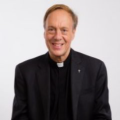
Pastor Tom Steers
Christ the Saviour Lutheran Church
- A Confessional Lutheran Church
Our Bible readings for today:
Old Testament – Isaiah 55:10-13
Psalm 65:1-13
Epistle – Romans 8:12-17
Gospel – Matthew 13:1-23
Our Hymn of the Day is LSB 577, “Almighty God, Your Word Is Cast”
The Sermon—
Grace, mercy, and peace to you from God our Father and our Lord and Saviour Jesus Christ. Amen.
Our Lord Jesus tells a familiar parable today, one so familiar that we may be tempted to think we already know everything it has to teach us.
We know about the sower, the seed, and the four different kinds of soil.
We know that the seed is the Word of God, and that the good soil represents those who hear the Word, hold fast to it, and bear fruit.
But if we stop there, we can miss the heart of the parable.
This is not first and foremost a lesson about becoming better soil.
Rather, it is a proclamation about the astonishing generosity of God, who never ceases to sow His life-giving Word.
Notice how extravagant the Sower is.
He does not carefully measure out the seed, planting only where success seems guaranteed.
He scatters it everywhere—on the path, among the rocks, into the thorns, and upon the good soil.
From a human perspective, this seems wasteful.
But God's grace is never stingy.
The Lord desires that all should hear His saving Word and come to saving faith.
He sends it broadly and freely.
That truth echoes through today's Old Testament reading from Isaiah.
The Lord declares, "As the rain and the snow come down from heaven and do not return there but water the earth... so shall My Word be that goes out from My mouth; it shall not return to Me empty, but it shall accomplish that which I purpose."
God's Word is never powerless. It always accomplishes His will.
Sometimes it creates faith. Sometimes it hardens those who refuse it.
But it never returns empty.
This helps us understand the difficult words Jesus speaks about those who hear but do not understand.
His disciples ask why He teaches in parables, and Jesus answers by quoting Isaiah.
He cites the words first spoken to the prophet in Isaiah 6:9–10, where Isaiah was commissioned to preach to a people whose hearts had already become hardened against God and His Word.
These words are not meant to suggest that God delights in blinding people or preventing them from believing.
Throughout Isaiah's ministry, the Lord repeatedly calls His people to repentance.
Yet persistent unbelief has consequences.
Hearts that continually reject God's Word become increasingly resistant to hearing it. The same sun that melts wax hardens clay.
The fault lies not with the sun, but with the nature of what receives it.
Jesus encounters the same reality in His own ministry.
Many hear Him gladly for a time.
Others dismiss Him outright.
Still others are fascinated by His miracles while refusing to believe His message.
His parables reveal hearts as they truly are.
Those who are broken by the Law and receive God’s mercy in the Gospel hear and believe.
Those who have closed their ears remain blind by their own unbelief.
The problem, is never the seed. The seed is always good.
Nor is the problem the Sower.
The problem is the fallen human heart.
And if we are honest, we must admit that every one of us finds ourselves somewhere in these descriptions.
Sometimes our hearts resemble the hardened path.
We hear God's Word, but our minds are elsewhere.
We listen with our ears while our hearts remain closed.
The evil one eagerly snatches away what has been heard before it can take root.
At other times we resemble the rocky ground.
We receive God's promises with joy.
But when suffering comes, when confessing Christ may be costly, when faith demands endurance rather than excitement, we begin to stumble.
Still other times, we become thorny soil.
The cares of this world press in upon us. Anxiety over tomorrow. The pursuit of wealth. Endless distractions.
We become so occupied with earthly concerns that the life of God's Word is slowly choked.
These are not merely descriptions of other people. They describe us.
That is why this parable calls us not to self-congratulation but to repentance.
Yet the wonderful comfort of the Gospel is this: the Sower does not stop sowing.
If this parable depended upon us producing fertile soil by our own efforts, we would all despair.
But the Lord who sows the Word is also the Lord who works through that very Word.
The Holy Spirit creates what He commands.
He breaks hardened hearts and removes stones.
He cuts away thorns.
Through repentance and forgiveness, He continually prepares hearts to receive Christ.
This is exactly what happens every Lord's Day.
Again and again, Christ comes among His people as the Sower.
He speaks His absolution to broken sinners, and proclaims His Gospel to weary consciences.
He places His own body and blood into the mouths of His people for the forgiveness of sins.
The same living Word that created faith in the beginning continues to sustain faith until the end.
That is why the Church has always treasured the means of grace.
We do not trust in emotional experiences or human wisdom.
We trust in the promises attached to God's Word.
As St. Paul reminds us in Romans, "You have received the Spirit of adoption as sons, by whom we cry, 'Abba! Father!'"
That confidence does not arise from our own hearts.
It comes through the Holy Spirit working by the Gospel.
He bears witness with our spirit that we are children of God.
The seed has taken root because God Himself has planted it.
This also gives us confidence as we look at the Church in the world.
Sometimes we become discouraged.
We can see declining attendance.
We see indifference to God's Word.
We see hostility toward the Christian faith, and may wonder whether the seed is accomplishing anything at all.
Jesus reminds us today that appearances are often deceptive.
Three of the four soils seem disappointing.
Yet even one patch of good soil produces an astonishing harvest—thirtyfold, sixtyfold, even a hundredfold.
Such abundance far exceeds anything an ordinary farmer could expect.
So it is with God's kingdom.
Where His Word creates faith, the harvest belongs to Him.
We are not called to measure success by worldly standards.
We are called simply to sow the Word faithfully and trust the Lord of the harvest.
The Psalm appointed for today beautifully joins this theme.
The Lord visits the earth and waters it.
He crowns the year with His bounty.
The fields and valleys sing for joy because God Himself provides the increase.
The farmer may sow and reap, but every harvest remains God's gift.
So also, in the Church.
Every Christian is the result of God's gracious work.
Every act of repentance and absolution.
Every child brought to Baptism.
Every believer fed at the Lord's Table.
All of it is the fruit of the divine Sower whose Word never returns empty.
Brothers and sisters, do not measure God's work by what your eyes can see today.
Measure it by His promises.
His Word is living and active.
His Gospel is the power of God for salvation.
His Spirit continues to call, gather, enlighten, and sanctify His whole Church through that Word.
And the day is coming when the full harvest will be gathered into His eternal kingdom.
Until then, Christ continues to sow.
He sows forgiveness where there is guilt.
Hope where there is despair.
Life where death reigns.
He sows His own crucified and risen Son into hearts that could never make themselves good soil.
And where Christ Himself is planted, there eternal life grows.
"He who has ears, let him hear."
In the name of the Father and of the +Son and of the Holy Spirit. Amen.
In Album: Pastor Tom Steers's Timeline Photos
Dimension:
400 x 323
File Size:
21.23 Kb


Be the first person to like this.