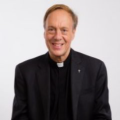
THE SECOND SUNDAY AFTER PENTECOSTJune 7, 2026Pastor Tom SteersChrist the Saviour Lutheran Church, TorontoOUR OPENING HYMN: 609 “Jesus Sinners Doth Receive” https://www.youtube.com/watch?v=RODV7z-UQhI&list=RDRODV7z-UQhI&start_radio=1(From Lutheran Service Book) The Invocation Page 184 Confession and Absolution Page 184-185 The Introit Psalm 50:7-10, antiphon: verse 1 The Mighty One, God the Lord, speaks and summons the earth from the rising of the sun to its setting. “Hear, O my people, and I will speak; O Israel, I will testify against you. I am God, your God.8 Not for your sacrifices do I rebuke you; your burnt offerings are continually before me.9 I will not accept a bull from your house or goats from your folds.10 For every beast of the forest is mine, the cattle on a thousand hills. Glory be to the Father and to the Son and to the Holy Spirit; as it was in the beginning, is now, and will be forever. Amen. The Mighty One, God the Lord, speaks and summons the earth from the rising of the sun to its setting. The Kyrie (Lord Have Mercy) Page 186 The Salutation Page 189 Collect Prayer: Almighty and most merciful God, You sent Your Son, Jesus Christ, to seek and to save the lost. Graciously open our ears and our hearts to hear His call and to follow Him by faith that we may feast with Him forever in His kingdom; through the same Jesus Christ, our Lord, who lives and reigns with You and the Holy Spirit, one God, now and forever. Amen.Bible Readings:Old Testament Reading Hosea 5:15 – 6:7 Psalm 119:65-72 (antiphon: v. 65) Epistle Reading Romans 4:13-25 Alleluia & Verse Page 190 Our Gospel Reading Matthew 9:9-13 THE NICENE CREED Page 191 HYMN OF THE DAY: 573 “Lord, ‘Tis Not That I Did Choose Thee” https://www.youtube.com/watch?v=XC_GPMZrZqk&list=RDXC_GPMZrZqk&start_radio=1THE SERMON –The Apostle Matthew writes of his own calling by Jesus. It is simple and powerful. "As Jesus passed on from there, he saw a man called Matthew sitting at the tax booth, and he said to him, 'Follow me.' And he rose and followed him."What a brief account.Only a few words are spoken. Yet in those words we see the very heart of the Gospel, and the way Christ gathers sinners, gathers us, into His kingdom.Matthew was not looking for Jesus. He wasn’t seeking a new spiritual path. He wasn’t searching for meaning or trying to improve himself. He was sitting at his tax booth doing the work for which he was known, and, in many people's eyes, despised.Tax collectors were regarded as traitors and collaborators with Rome. They were notorious for dishonesty and greed. Perhaps even worse, Matthew, also called Levi, was from the tribe of the Levites.Male members of the tribe were to serve in the Jerusalem temple.And here he is collecting taxes for Herod and Cesar.Notice, though, how carefully the encounter unfolds with Jesus. Matthew doesn’t volunteer. He does not ‘decide’ to become a follower of Jesus.Christ speaks."Follow me."That’s all.But that Word is not merely information. It is not a suggestion. It is the living and effective Word of God. The same Lord who said, "Let there be light," now says to Matthew, "Follow me."And Matthew does.The call creates what it commands.This is how God has always worked. He comes to sinners through His Word and sacraments. He calls us through these means of grace. He creates faith and sustains it. He grants repentance. He gathers us into His kingdom.The Gospel is not about our ‘making a decision’ for Christ. It is about Christ's gracious decision and saving work for us.This truth stands at the center of the Lutheran Confessions. Based on the Bible, we confess that sinners are spiritually dead and incapable of saving themselves. The Apostle Paul wrote in Ephesians, Chapter 2:‘you were dead in your trespasses and sins . . . But God made us alive together with Christ — For by grace you have been saved through faith. And this is not your own doing; it is the gift of God, not a result of works, so that no one may boast.”Faith itself is God's gift, worked through the means of grace.Jesus taught the disciples, and us, when He said in John 15:16, “You didn’t choose me, I chose you.”The Reformer Martin Luther wrote:"Faith is God's work in us, which changes us and brings us to birth anew from God. “It kills the old Adam and makes us altogether different people in heart, spirit, mind and powers, and it brings with it the Holy Spirit. “It is a living, busy, active, mighty thing, this faith."That is what happened to Matthew. Christ spoke. Faith was created. Matthew arose and followed.The same Lord still calls sinners today.He calls us through His Word proclaimed and through the Gospel joined to water in Holy Baptism, where we also receive forgiveness of sins. Whenever the Gospel is preached, Christ Himself is speaking. He continues to call men, women, and children into His kingdom.He sustains us in the faith and forgives us in the Lord’s Supper.After calling Matthew, Jesus does something that scandalizes the Pharisees.He sits down and eats with tax collectors and sinners.To us, sharing a meal may seem ordinary. In the ancient world, it was a sign of fellowship and acceptance. The Pharisees see what’s happening and immediately object."Why does your teacher eat with tax collectors and sinners?"Their question reveals their misunderstanding of righteousness. They divide humanity into two groups: those who have made themselves appear to be righteous and those who are sinners. Naturally, they place themselves among the righteous.But Jesus exposes the problem."Those who are well have no need of a physician, but those who are sick."Jesus is not saying that the Pharisees are actually healthy. Rather, they think they are healthy. They do not recognize their disease.They believe that they can justify themselves before God.And there are false Christian theologies that promote the same error today.But a doctor can only help those who know they’re ill.Likewise, the Gospel is for those who recognize their sin and need for a Saviour.Jesus does not eat with sinners because He approves of their sin. He doesn’t join them in their rebellion against God. He comes among them for the same reason a physician enters a hospital ward.He comes to heal.To save.In the case of Jesus, to forgive sins.His presence among sinners is not an endorsement of sin but an act of divine mercy.This is important for the Church in every generation.Today, some speak much about Jesus welcoming sinners, but little about repentance. Yet Christ never separates the two. He welcomes sinners to save them from their sins.He calls people precisely because they are sinners.He speaks His Word so that hearts may be turned from sin to faith.That is why Jesus quotes the prophet Hosea: "I desire mercy, and not sacrifice."The Lord spoke similar words through Hosea in our Old Testament reading. The problem was not that Israel lacked religious activity. They had sacrifices, ceremonies, and outward observances. What they often lacked was genuine faith and repentance.What they failed to see was that God’s mercy toward them in the coming Messiah was more important than ritual laws, many of which the Pharisees had made up themselves.So, their devotion was shallow and fleeting.The Lord says through Hosea, "Your love is like a morning cloud, like the dew that goes early away."God desires hearts that trust in Him.The Pharisees had plenty of man-made rules, but little repentance or faith.The tax collectors and sinners sitting at the table with Jesus had something very important: they knew they were sinners.And that brings us to ourselves.Every one of us enters the Church in the same condition as Matthew.As sinners.Some sins are public and visible. Others are hidden deep within the heart. The failure to fulfill the Ten Commandments is common to us all. Yet the greatest danger is not that we are sinners.The greatest danger is that we can be tempted to think we are not.Whenever we excuse or minimize our sins, whenever we trust in our own ‘good works’ for salvation, we are standing beside the Pharisees rather than sitting at the table with Jesus.Christ says, "I came not to call the righteous, but sinners."Only those who acknowledge their sin can receive forgiveness.Only those who hunger for mercy can be filled with mercy.Only those who recognize their spiritual poverty can receive the riches of Christ.St. Paul beautifully develops this theme in today's Epistle from Romans.Paul points us to Abraham. God’s promise was not given through the Law, but through faith.Abraham was justified not because of his works, but because he trusted God's promise.Paul writes that righteousness was counted to Abraham through faith.Then Paul applies that same truth to us.The words "it was counted to him" were written not for Abraham alone but for us also. Righteousness will be counted to us who believe that Christ died on the cross to pay for our sins and was raised from the dead for our justification. This is the Gospel.We are not saved by our works, accomplishments, or decision.We are saved by God’s grace alone, through faith alone, in Jesus Christ alone.This is the key message of Holy Scripture from beginning to end.This is the message recovered and proclaimed in the Lutheran Reformation.This is the message that comforts troubled consciences and gives peace to sinners.Christ came for Matthew.He came for the sinners gathered around His table.And Christ came for you.He calls you through His Word.He declares your sins forgiven through His Gospel.He feeds you with His own body and blood in the Lord’s Supper.And one day He will welcome all repentant believers to the eternal feast in His heavenly kingdom.There, every impact of sin will be removed.There, faith will become sight.And the redeemed will sit forever with the Lord who called them by grace.Amen. PRAYERS OF THE CHURCH SERVICE OF THE SACRAMENT Page 194 Sanctus (Holy, Holy, Holy) Page 195 The Lord’s Prayer Page 196 The Words of Our Lord Page 197 Agnus Dei (Lamb of God) Pages 198 (Our Communion Hymn is 627 “Jesus Christ, Our Blessed Saviour”) Nunc Dimitis (Song of Simeon) Page 199 Post-Communion Collect (Left-hand column) Page 201 CLOSING HYMN: 923 “Almighty Father, Bless the Word”
In Album: Pastor Tom Steers's Timeline Photos
Dimension:
600 x 337
File Size:
98.62 Kb


Be the first person to like this.