PALM SUNDAY
March 29, 2026
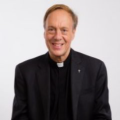
Pastor Tom Steers
Christ the Saviour Lutheran Church, Toronto
OPENING HYMN: 442 “All Glory, Laud, and Honour
https://www.youtube.com/watch?v=zha0euqzKX0&list=RDzha0euqzKX0&start_radio=1
Lutheran Service Book
CONFESSION AND ABSOLUTION Page 184-185
THE INTROIT
Psalm 24, verses 7-10; antiphon Ps. 118:26
Blessed is he who comes in the name of the Lord!
We bless you from the house of the Lord. 7 Lift up your heads, O gates!
And be lifted up, O ancient doors,
that the King of glory may come in.
8 Who is this King of glory?
The LORD, strong and mighty,
the LORD, mighty in battle!
9 Lift up your heads, O gates!
And lift them up, O ancient doors,
that the King of glory may come in.
10 Who is this King of glory?
The LORD of hosts,
he is the King of glory! Blessed is he who comes in the name of the Lord!
We bless you from the house of the Lord.
THE KYRIE (Lord Have Mercy) Lord have mercy upon us. Christ have mercy upon us. Lord have mercy upon us.
Pastor: The Lord be with you.
Congregation: And with thy Spirit.
COLLECT PRAYER:
Almighty and everlasting God, You sent Your Son, our Savior Jesus Christ, to take upon Himself our flesh and to suffer death upon the cross. Mercifully grant that we may follow the example of His great humility and patience and be made partakers of His resurrection; through the same Jesus Christ, our Lord, who lives and reigns with you and the Holy Spirit, one God, now and forever. Amen.
OUR BIBLE READINGS:
First Reading Isaiah 50:4-9a Psalm 118, verses 19-29 Epistle Reading Philippians 2:5-11 Gospel Reading John 12:12-19
THE APOSTLES’ CREED Page 192
HYMN OF THE DAY 443 “Hosanna, Loud Hosanna”
https://www.youtube.com/watch?v=HPSKbXxpudU&list=RDHPSKbXxpudU&start_radio=1
THE SERMON –
Thousands of people in Jerusalem come out to welcome and shout praises to a man they’ve heard about.
Rumours are spreading throughout the Holy City.
A prophet has raised a man from the dead in Bethany, a town only three kilometres away.
A number of people from Jerusalem knew Lazarus; some had even gone to his funeral and seen Jesus raise him from the tomb.
Many ask, who was this prophet, this miracle worker?
Could He be the Messiah, the expected King of Israel, who they thought would free them from the Romans?
The streets are lined with people waving palm branches, shouting: Hosanna to the Son of David!
Hosanna is a Hebrew word that comes from Aramaic, the ancient language Jesus and His disciples spoke.
Hosanna means: ‘Save, Rescue, Saviour.’
But there were a number of responses to this figure riding into Jerusalem on a donkey.
Some came from friends.
Some from enemies.
There were those in Jerusalem who had actually heard Jesus and seen the miracles He performed.
There were those in the crowd who may have been healed by Christ Himself.
The Gospel according to Mark tells of a blind man named Bartimaeus.
Jesus met him as He traveled to Jerusalem, and gave him sight.
Bartimaeus responded by following Jesus on the way (Mark 10:46–52).
So Bartimaeus would have been in the gathering.
Bethany, where Lazarus lived with his sisters Mary and Martha, was just on the other side of the Mount of Olives.
It was the starting point for Jesus’ entry into Jerusalem on Palm Sunday.
People from Bethany would have been telling everyone they met that Jesus had raised their neighbour.
Christ had performed all the signs of the Messiah:
-- the blind received sight,
-- the lame walked,
-- the deaf could hear,
-- the dead were raised up,
and the poor had good news preached to them. (Matthew 11:5)
It’s not surprising people were looking for more of the same.
Some in the crowd were big fans of Jesus, because they were looking for someone to use divine power to make their lives easier on earth.
No small part of that would have been getting rid of the Romans.
They wanted an earthly King who could access divine strength.
They wanted the ‘bread king’ who could miraculously feed the masses, and Christ had.
They wanted the state of Israel to be re-established, political change.
Then there were the enemies of Christ.
These enemies came from the full spectrum of political life in that day.
There were the Pharisees, scribes, Sadducees, Chief Priests, Herodians loyal to King Herod.
Many of these groups were sworn enemies of one another during normal times.
It says something about their hatred of Jesus that they were able to overlook their intense dislike for one another to come together against Christ.
They simply wanted Jesus dead.
Because if Jesus were successful, their comfortable lifestyles would end.
These enemies had a vested interest in the religious establishment of the day.
The activities at the temple provided them with money, power, and prestige.
They were very happy with the status quo.
Although they couldn’t deny the signs and miracles Jesus did, they insisted Christ performed His many wonders by the power of Beelzebul, the prince of demons. (Matthew 12:24)
They were jealous of Christ, of His authentic power.
Then, some were just in Jerusalem because it was Passover.
The Law of Moses instructed devout Jewish men to spend the days of the Passover in the temple areas if they could.
There were also many extra Roman soldiers who were deployed to keep the peace during this Jewish festival that brought about 200,000 visitors to the city.
During the Passover, Jerusalem would swell to about five times its usual population.
However, few of the people who witnessed the Palm Sunday procession had a clear understanding, and faith, that this figure riding into Jerusalem on a donkey actually was the Messiah …God’s only Son, the anointed Saviour of the world who would sacrifice Himself on the cross as payment for our sin.
The crowds did not understand that Christ was on His way to do battle for the very souls of mankind.
Very few realized that where they would spend eternity hung in the balance, as this humble figure rode into Jerusalem and up to the temple.
In the Bible verses immediately following today’s Gospel reading, Jesus teaches about the battle awaiting Him.
Christ said, “The hour has come for the Son of Man to be glorified. Truly, truly, I say to you, unless a grain of wheat falls into the earth and dies, it remains alone; but if it dies, it bears much fruit.” (John 12:23–24)
This is Jesus teaching us that He must die in order to win.
He, like the seed, must lie in the ground to bear fruit.
This is a totally different kind of glory.
The Passover pilgrims think glory would be Jesus ushering in a new age of prosperity for Israel.
Jesus’ enemies think they can destroy His glory by killing Him.
But Jesus says it’s His death that will glorify Him – that His death will bear much fruit.
How ironic that both Jesus and His enemies see death as the eventual outcome.
The enemies view Christ’s death as the way to put an end to Him.
But Jesus knows His death will be a victory over sin, death, and the devil.
This is where satan, the great deceiver, deceived himself.
Jesus regularly, and plainly said, He was to suffer, die, and rise on the third day.
The prophets were clear as well.
When Jesus encountered demons and cast them out, they knew He was the Son of God.
The devil didn’t see that his plans to put Jesus to death would backfire, so that Christ would use death itself to defeat him.
Jesus knew everything was in place for His sacrifice; He had put these things in place, intentionally.
Before He rode that donkey into Jerusalem, Christ had always said, “My hour has not yet come.”
Now He said, “The hour has come for the Son of Man to be glorified.”
He explained, “Now is the judgment of this world; now will the ruler of this world be cast out.”
The final events that would lead to His death, the climax of His mission, were just a few days away.
This plan of salvation seems strange to the sinful human mind.
The idea that redemption would come from one who suffered the shame of death on a cross doesn’t make sense to many.
Not then, not now.
The Jesus who dies for our sins is an uncomfortable Saviour.
We don’t like to admit we have sins for which someone must die.
We don’t want to look at the reality of the cross, and realize that it should be us up there.
Some don’t much care for the Jesus who willingly died for us who were born spiritually dead in our trespasses.
And that is because it’s humbling to admit we need God’s forgiveness to have life, and can only be saved by Christ.
Nevertheless, God loves us, and sent His only Son to offer Himself as the ultimate sacrifice.
The one who entered Jerusalem in majesty on Palm Sunday, would carry a cross out of Jerusalem on Friday.
Just as surely as He carried that cross, He also carried the sin of the world, yours and mine.
His sacrificial death, His substitutionary atonement, would earn us forgiveness, life, and salvation.
It was the only way; we couldn’t do it for ourselves.
From a worldly standpoint, the procession into Jerusalem on Palm Sunday seemed a lot more victorious than the procession out of Jerusalem to Calvary.
But the true victory took place on the Friday we call good.
There on a cross, the King who rode in majesty defeated the devil with His own body and blood.
And the victory Christ won with His death enabled a new procession, a procession that began three days later and has not yet ended.
This is the marching on of the Christian Church.
This will be the procession up out of the grave and into eternal life.
Jesus Christ died for our sins, and because of that you who believe in Him will follow our Saviour into Heaven.
Amen.
PRAYERS OF THE CHURCH
SERVICE OF THE SACRAMENT Page 194 Sanctus (Holy, Holy, Holy) Page 195 The Lord’s Prayer Page 196 Agnus Dei (Lamb of God) Page 198 Post-Communion Collect (Left-hand column) Page 201
CLOSING HYMN: 441 “Ride On, Ride On in Majesty”
https://www.youtube.com/watch?v=LcxG2JasPds&list=RDLcxG2JasPds&start_radio=1
In Album: Pastor Tom Steers's Timeline Photos
Dimension:
371 x 247
File Size:
41.04 Kb


Like (1)
Loading...