THE SECOND SUNDAY AFTER CHRISTMAS
January 4, 2026
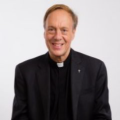
Pastor Tom Steers
Christ the Saviour Lutheran Church, Toronto
Our Opening Hymn is: 376 “Once in Royal David’s City”
Confession and Absolution Page 184-185
The Introit –
Psalm 147:1, 5, 11-12; antiphon: John 1:14
The Word became flesh and dwelt among us, and we have seen his glory, glory as of the only Son from the Father, full of grace and truth. Praise the Lord!
For it is good to sing praises to our God;
for it is pleasant, and a song of praise is fitting. Great is our Lord, and abundant in power;
his understanding is beyond measure. But the Lord takes pleasure in those who fear him,
in those who hope in his steadfast love. Praise the Lord, O Jerusalem! Praise your God, O Zion! Glory be to the Father and to the Son and to the Holy Spirit; as it was in the beginning, is now, and will be forever. Amen. The Word became flesh and dwelt among us, and we have seen his glory, glory as of the only Son from the Father, full of grace and truth.
Kyrie (Lord Have Mercy) Lord have mercy upon us. Christ have mercy upon us. Lord have mercy upon us.
Pastor: The Lord be with you.
Congregation: And with thy Spirit.
Our Collect Prayer –
Almighty God, You have poured into our hearts the true Light of Your incarnate Word. Grant that this Light may shine forth in our lives; through the same Jesus Christ, Your Son, our Lord, who lives and reigns with You and the Holy Spirit, one God, now and forever. Amen.
Our Bible Readings:
Old Testament: 1st Kings 3:4-15 Psalm 119:97-104 (antiphon: v. 99) Epistle: Ephesians 1:3-14 Gospel Reading: Luke 2:40-52
THE APOSTLES’ CREED Page 192
HYMN OF THE DAY: 410 “Within the Father’s House”
https://www.youtube.com/watch?v=waHlA6fALAc&list=RDwaHlA6fALAc&start_radio=1
THE SERMON –
The Gospel reading for this Second Sunday after Christmas gives us one of the few glimpses we have into the childhood of our Lord.
We remember that the Gospels are not biographies of Jesus, but written so that we may believe that Jesus is the Christ, the Son of God, and that by believing, we have life in his name.
St. Luke tells us that the child Jesus, “grew and became strong, filled with wisdom,” and that “the favour of God was upon Him.”
These words may sound simple, even comforting, but they also confront us with a profound mystery. The eternal Son of God, through whom all things were made, truly grows.
The One who is Wisdom itself increases in wisdom.
The Lord of heaven and earth submits Himself to the ordinary rhythms of human life —learning, asking questions, obeying parents, and maturing in body and mind.
Here, in this Christmas season, the Church is led to confess not only that God became man, but that He has done so fully and humbly for us, and for our salvation.
Luke presents a scene both tender and unsettling.
Jesus is twelve years old, standing at the threshold between childhood and adulthood.
He travels with Mary and Joseph to Jerusalem for the Passover, faithful to the Law.
Yet when the caravan returns home, Jesus remains behind in the temple, unnoticed at first, but soon missing.
For three days, His parents search for Him, only to find Jesus sitting among the teachers, listening and asking questions. And then comes His startling reply: “Did you not know that I must be in My Father’s house?”
With these words, Christ reveals something essential about who He is and why He has come.
Even as a boy, He knows His life is ordered toward His saving mission. Even now, His obedience is directed first to the heavenly Father, honouring both Him and His earthly parents.
We can remember that Jesus is seated in the temple, only walking distance to where He will die, years later, on a cross, to make complete payment for the sins of the world.
Mary and Joseph don’t fully understand what He says to them.
St. Luke tells us that Mary treasures these things in her heart, pondering them.
Faith doesn’t mean fully grasping the divine will.
Often, it clings to God’s promises while still asking questions and bearing uncertainty.
This Gospel reminds us that the Christian life is not lived by sight, but by trust in the Word of God, even when His ways seem hidden.
The boy Jesus astonishes the teachers in the temple with His understanding and His answers.
Yet, He doesn’t stand above them in a show of power. He listens. Asks. He learns according to His human nature.
This isn’t a denial of His divinity, but a confirmation of His true humanity.
As the Bible and the ancient Church confessed, Jesus is fully God and fully man, not confusing the two natures, nor separating them.
Here, the Epistle reading from Ephesians helps us understand what’s at stake.
The Apostle Paul blesses God for having chosen us in Christ, “before the foundation of the world.”
Before Jesus sits in the temple as a boy, before He walked to the cross, before He rose from the dead, God’s saving plan was already in motion.
In Christ, we have redemption through His blood, the forgiveness of our trespasses, according to the riches of His grace.
The child in the temple is the same Lamb without blemish who will later offer Himself as the final sacrifice for humanity’s sins.
His questions and answers already point toward the wisdom of the cross, which confounds human reasoning, but reveals the heart of God.
The Old Testament reading from 1st Kings also sheds light on today’s Gospel.
When the Lord appears to Solomon in a dream and invites him to request whatever he desires, Solomon doesn’t ask for wealth or long life.
He asks for an understanding heart to govern God’s people and to discern between good and evil.
The Lord delights in this response and grants Solomon wisdom beyond measure.
Yet even Solomon’s wisdom, as great as it was, would later falter. Human wisdom, even at its best, remains fragile and incomplete.
In contrast, Christ is the true wisdom of God in human flesh.
He doesn’t merely receive wisdom as a gift; He embodies it. And yet He humbles Himself so that our salvation might be accomplished not by divine spectacle, but by faithful obedience to the Father, even to death on a cross.
Martin Luther once reflected on our Gospel passage, saying, “Christ learned as other children learn, that He might sanctify learning and growth, and that no one might despise the humble estate of youth.”
In this way, Luther reminds us that Christ’s childhood is not an incidental background.
It is saving. In our Baptism, Christ unites us to Himself and claims us.
His righteousness is credited to us.
Because Jesus grows in wisdom, our ignorance is not condemned, but redeemed.
Because He submits to His parents, our failures in obedience are covered by His perfect life.
Because He remains faithful to His Father’s house and will, even at the cost of misunderstanding and sorrow, we are brought home to God.
Today, the Church, like the temple of old, is a place where Christ is found in the midst of God’s Word.
Here, He still listens to our prayers.
He still teaches through Holy Scripture faithfully proclaimed.
He still grows us in wisdom, not according to the standards of the world, but according to the truth and grace of God given in Him.
Luke concludes this account by recording Christ’s return to Nazareth, where He is submissive to His parents.
The extraordinary gives way to the ordinary.
The Saviour of the world lives quietly, faithfully, patiently, until the time appointed by the Father.
Our lives, as Christians, are sometimes hidden, marked by quiet daily faithfulness and service.
Yet in Christ, these ordinary lives are filled with divine purpose.
We are blessed in Him with every spiritual blessing in the heavenly places.
We are God’s adopted sons and daughters through Christ.
We are sealed with the promised Holy Spirit.
All of this flows from the same Lord who once sat in the temple as a boy and now reigns at the right hand of the Father.
As we continue in the Christmas season, this Gospel invites us to marvel not only at the manger, but at the whole life of Christ lived for us. He grows so that we might be made new.
He learns so we might be taught by grace.
He obeys so that we might be freed from sin and death.
To Him alone be all glory and honour, now and forever. Amen.
THE PRAYERS OF THE CHURCH
SERVICE OF THE SACRAMENT Page 194 Sanctus (Holy, Holy, Holy) Page 195 The Lord’s Prayer Page 196 Agnus Dei (Lamb of God) Page 198 Post-Communion Collect (Left-hand column) Page 201
OUR CLOSING HYMN: 386 “Now Sing We, Now Rejoice”
In Album: Pastor Tom Steers's Timeline Photos
Dimension:
488 x 265
File Size:
45.45 Kb


Like (1)
Loading...
Love (1)
Loading...