🏡 Arizona Home Loan Options: Which Mortgage Is Right for You?
By Jeff Cayton | REALTOR® | r3homegroup™ | DeLex Realty
Buying a home in Arizona? Whether you're a first-time buyer, relocating, or inve... View More🏡 Arizona Home Loan Options: Which Mortgage Is Right for You?
By Jeff Cayton | REALTOR® | r3homegroup™ | DeLex Realty
Buying a home in Arizona? Whether you're a first-time buyer, relocating, or investing, understanding your mortgage options is essential!
You don't necessarily need 20% down! Several programs offer low or zero-down-payment options for qualified buyers.
🔑 1. Conventional Loans
Down payments as low as 3% for eligible borrowers. Available for primary residences, second homes, and investment properties.
🏠 2. FHA Loans
FHA loans offer down payments as low as 3.5% and flexible credit guidelines. Mortgage insurance applies.
🇺🇸 3. VA Loans
Available to eligible veterans, military members, and certain surviving spouses. Often no down payment and no monthly private mortgage insurance. A funding fee may apply.
🌵 4. USDA Loans
Qualified buyers in eligible rural and suburban areas may receive zero-down-payment financing. Income and location restrictions apply.
💎 5. Jumbo Loans
Buying a luxury home in Scottsdale or Paradise Valley? Jumbo loans finance amounts exceeding conforming limits. Requirements vary by lender.
💰 6. Arizona Down Payment Assistance
Programs such as HOME Plus and Home in Five Advantage may help eligible buyers with down payments or closing costs. Availability and terms vary.
🏗️ 7. Construction & Renovation Loans
Building a home or buying a fixer-upper? Construction loans and renovation programs such as FHA 203(k) and HomeStyle Renovation offer specialized financing.
📊 8. Adjustable-Rate Mortgages (ARMs)
ARMs offer an initial fixed-rate period followed by potential rate adjustments. Payments may increase.
🏘️ 9. Investment & Specialty Loans
Investors and self-employed buyers may explore DSCR, bank-statement, portfolio, and bridge loans.
💡 Which Loan Is Right for You?
Your ideal mortgage depends on your credit, income, savings, and goals. Compare rates, closing costs, insurance, and monthly payments.
Get preapproved before shopping! Understanding your financing helps you make confident offers.
At r3homegroup™ | DeLex Realty, we connect Arizona buyers with experienced lenders and guide them from start to finish.
📲 Ready to buy? Let's talk!
Jeff Cayton | REALTOR®
r3homegroup™ | DeLex Realty
📞 602-320-7547
🌐 www.r3homegroup.com
📧 arizonahomeseller1@gmail.com
RELOCATE • RESTART • REINVEST
Loan terms and eligibility vary. Consult a licensed mortgage professional.
#ArizonaRealEstate #HomeLoans #MortgageOptions #PhoenixRealEstate #FirstTimeHomeBuyer #FHALoans #VALoans #r3homegroup #DeLexRealty
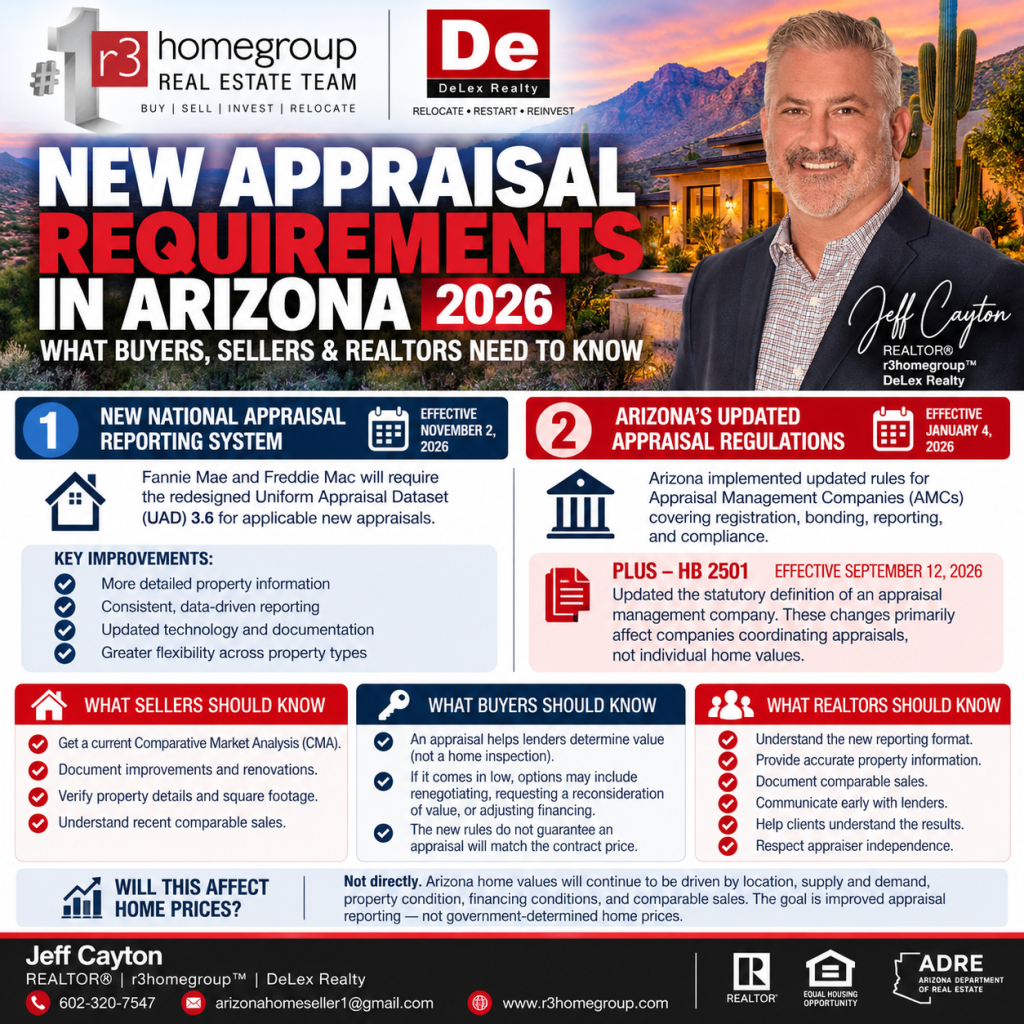
🏡 Arizona Real Estate Appraisal Rules Are Changing in 2026: What Buyers, Sellers, and Realtors Need to Know
By Jeff Cayton | Realtor® | r3homegroup™ | DeLex Realty
The Arizona real estate industry is ... View More🏡 Arizona Real Estate Appraisal Rules Are Changing in 2026: What Buyers, Sellers, and Realtors Need to Know
By Jeff Cayton | Realtor® | r3homegroup™ | DeLex Realty
The Arizona real estate industry is experiencing important changes in how residential appraisals are documented, processed, and regulated.
Whether you're buying a home in Phoenix, selling in Scottsdale, investing in Chandler, or working as a real estate professional anywhere in Arizona, understanding these changes can help you prepare for a smoother transaction.
Two developments deserve particular attention in 2026: a major national appraisal reporting overhaul and new Arizona regulations affecting appraisal management companies.
Let's break down what is changing and why it matters.
📋 1. A Major Change to Residential Appraisal Reports
Beginning November 2, 2026, Fannie Mae and Freddie Mac will require the redesigned Uniform Appraisal Dataset (UAD) 3.6 for new appraisal reports submitted through their Uniform Collateral Data Portal, subject to approved lender exceptions.
This represents a significant modernization of residential appraisal reporting.
For years, appraisers have relied on traditional standardized appraisal forms. The new system introduces a more flexible, data-driven reporting format designed to improve consistency and the way property information is communicated.
What is changing?
- A redesigned Uniform Residential Appraisal Report (URAR)
- More structured property and market information
- Reporting that adapts to different residential property types
- Greater consistency in how appraisal data is collected and presented
- Updated technology and workflows for appraisers, lenders, and appraisal management companies
What does this mean for Arizona homeowners?
It does not mean your home's value automatically changes.
It means the information supporting an appraisal will be documented using a different reporting structure for affected loans.
⚖️ 2. Arizona Has Updated Its Appraisal Management Company Rules
Arizona has also made regulatory changes affecting Appraisal Management Companies (AMCs), the businesses that often coordinate appraisal assignments between lenders and appraisers.
On January 4, 2026, updated Arizona administrative rules took effect addressing AMC bonding, reporting, registration renewals, and related responsibilities.
Additionally, Arizona House Bill 2501, effective September 12, 2026, modified the statutory definition of an appraisal management company, including provisions concerning entities administering appraiser panels during a 12-month period.
These changes primarily concern the companies managing appraisal services rather than directly changing how individual home values are determined.
However, they are important for maintaining a properly regulated appraisal process.
🏠 3. What Arizona Home Sellers Should Know
If you're preparing to sell your home, a well-supported asking price remains essential.
An appraisal is not simply a reflection of what a seller wants or what a buyer is willing to offer. Appraisers consider relevant market evidence, property characteristics, condition, location, and comparable sales.
My recommendations for sellers:
✅ Price your property using a current Comparative Market Analysis (CMA).
✅ Keep records of permitted renovations, improvements, and major system upgrades.
✅ Make sure property details, square footage, and features are accurately represented.
✅ Understand that upgrades do not always translate dollar-for-dollar into appraised value.
✅ Work with an experienced Realtor who understands your local market.
Whether your home is in Ahwatukee, Gilbert, Mesa, Paradise Valley, or Maricopa, local market knowledge remains a major advantage.
🔑 4. What Arizona Homebuyers Should Know
For buyers using mortgage financing, the appraisal remains an important part of the lender's evaluation.
A home appraisal and a home inspection are not the same thing.
An appraisal helps the lender evaluate the property's value as collateral. A home inspection examines its physical condition and potential defects.
If an appraisal comes in below the purchase price, buyers may need to discuss available options with their lender and Realtor.
Depending on the purchase contract and financing terms, possible solutions could include renegotiating the price, requesting a reconsideration of value supported by relevant information, or adjusting the financing structure.
The new reporting system does not eliminate appraisal contingencies or guarantee that an appraisal will match the contract price.
📊 5. Why Realtors Need to Pay Attention
Real estate professionals should understand the changes before they affect a transaction.
As the industry transitions to UAD 3.6, communication among agents, lenders, appraisal management companies, and appraisers will be especially important.
Agents should focus on:
- Understanding the new appraisal reporting format
- Providing accurate property information
- Preparing relevant comparable sales and documented improvements
- Communicating early with lenders about appraisal timelines
- Helping buyers and sellers understand appraisal results
- Respecting appraiser independence and established reconsideration procedures
Technology and reporting standards are evolving, but professional judgment, accurate data, and ethical conduct remain essential.
🚀 6. Will These Changes Affect Arizona Home Prices?
Not directly.
The new appraisal reporting requirements do not establish new home values, change market prices, or automatically increase or decrease what a property is worth.
Arizona home values will continue to be influenced by factors such as supply and demand, location, property condition, financing conditions, and comparable sales.
The primary objective of the UAD 3.6 transition is to improve appraisal data quality and reporting consistency.
During implementation, buyers and sellers should remain in close communication with their lenders and agents about any transaction-specific requirements or delays.
💡 My Perspective: Preparation Is Your Competitive Advantage
After years of helping buyers and sellers throughout the Phoenix metropolitan area, one thing remains clear:
Successful real estate transactions depend on preparation, communication, and having knowledgeable professionals on your side.
Regulations change. Technology evolves. Markets shift.
But understanding the process and staying ahead of industry developments can make a meaningful difference.
At r3homegroup™ | DeLex Realty, our focus remains on educating clients, providing personalized service, and helping buyers and sellers make informed real estate decisions.
Whether you're purchasing your first home, selling a luxury property, relocating to Arizona, or considering an investment, we're here to help.
📞 Jeff Cayton | Realtor®
🏡 r3homegroup™ | DeLex Realty
📱 602-320-7547
🌐 www.r3homegroup.com
📧 arizonahomeseller1@gmail.com
RELOCATE • RESTART • REINVEST
💬 Let's Discuss
Are you an Arizona Realtor, lender, or appraiser preparing for the new appraisal reporting requirements?
What opportunities or challenges do you anticipate?
I'd love to hear your thoughts in the comments.
#ArizonaRealEstate #RealEstateAppraisal #AppraisalRules #UAD36 #ArizonaRealtor #PhoenixRealEstate #DeLexRealty #r3homegroup #HomeBuyers #HomeSellers #RealEstateEducation #MortgageIndustry #RealEstateNews
page=1&profile_user_id=503014&year=&month=
Load More