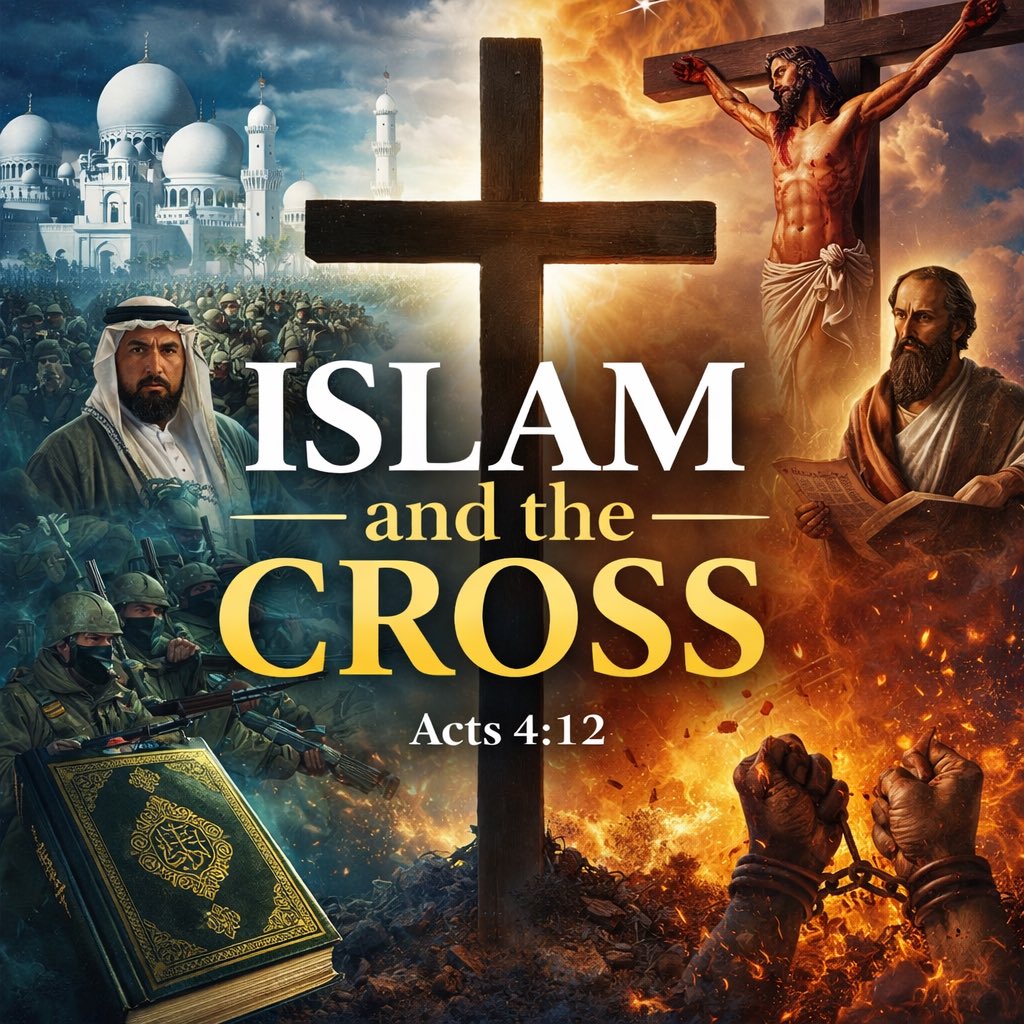
Islam and the Cross - The Line Most Christians Don’t See
When you search “Islam,” you’ll see headlines about politics, war, terrorism, culture clashes, and global conflict. But most Christians are mi... View MoreIslam and the Cross - The Line Most Christians Don’t See
When you search “Islam,” you’ll see headlines about politics, war, terrorism, culture clashes, and global conflict. But most Christians are missing the real issue. Islam is not merely a political force. It is a theological system built on a different Jesus, a different gospel, and a different final authority. That’s not hostility. That’s definition.
Islam affirms Isa. Christianity proclaims Jesus Christ, the Son of God. Islam denies the crucifixion. Christianity stands or falls on it. The Bible says, “Christ died for our sins… and that he rose again the third day” (1 Corinthians 15:3–4). The Quran explicitly rejects that crucifixion occurred. That is not a minor disagreement. That is a collision at the center of salvation.
Many believers say, “Leave Islam alone. They believe in one God.” But so does every monotheistic system on earth. The issue is not generic theism. The issue is the cross and resurrection. “If Christ be not raised, your faith is vain; ye are yet in your sins” (1 Corinthians 15:17). If Islam is correct about Jesus, then Christianity collapses. If Christianity is correct, Islam does.
Muhammad claimed to confirm prior revelation. Yet he contradicts the gospel preached by the apostles. Paul warned, “Though we, or an angel from heaven, preach any other gospel… let him be accursed” (Galatians 1:8). Claims of angelic revelation do not override the finished work of Christ.
Sharia law, jihad, and Islamic governance are downstream effects of theology. Doctrine shapes civilization. If Jesus did not die for sin, then forgiveness is earned. If forgiveness is earned, then law becomes central. If law becomes central, then enforcement follows. That is not politics first. That is theology working itself out.
Christ never built a state. He said, “My kingdom is not of this world” (John 18:36). Muhammad built a state, commanded military campaigns, and fused religion with civil authority. Those are historical facts, not insults. The founders determine the structure.
Christ healed His enemies and died praying for their forgiveness (Luke 23:34). Muhammad fought battles and governed tribes. Again, this is not slander. It is biography. The question is which model defines ultimate authority for mankind.
So when you search Islam, don’t stop at headlines. Ask the deeper question: What does Islam say about Jesus Christ? Because eternity hangs on that answer. “Neither is there salvation in any other” (Acts 4:12). That claim cannot coexist peacefully with a system that denies the cross.